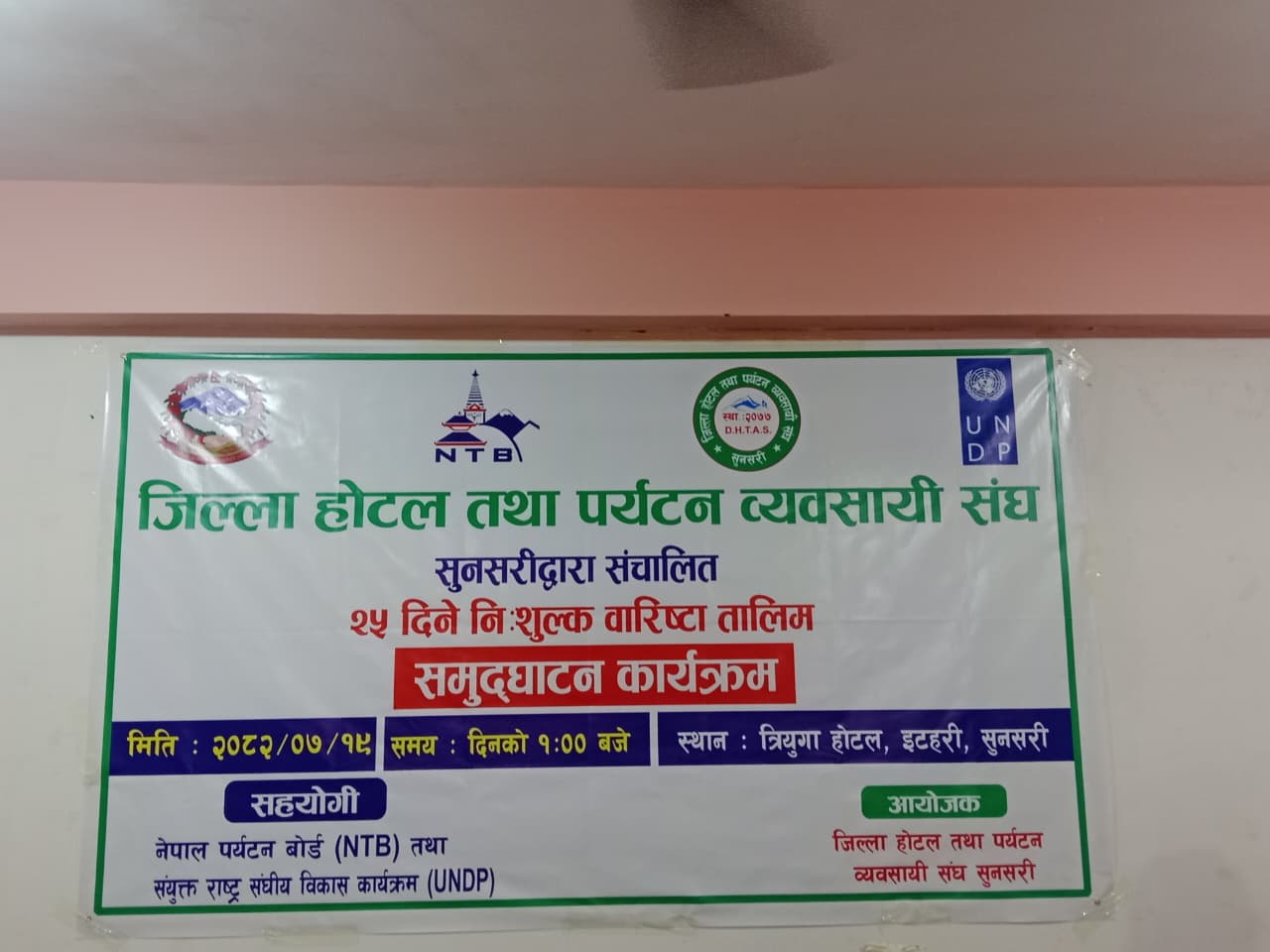
A 25-day free barista training program has officially commenced in Itahari, aiming to equip local youth with professional coffee-making skills and enhance employability in the hospitality and tourism sector. The training has been organized by the District Hotel and Tourism Entrepreneurs Association, Sunsari, with support from the Sustainable Tourism Project (STP), a joint collaboration between the Nepal Tourism Board (NTB) and the United Nations Development Programme (UNDP).
Training to Build Local Capacity in Tourism and Hospitality
According to the organizers, the program focuses on providing practical and theoretical knowledge of coffee preparation, presentation, and service. Participants will learn the art of brewing, latte design, and the management of a café environment, helping them meet the rising market demand for skilled baristas in Nepal’s growing coffee culture.

During the inauguration ceremony, Tej Bahadur Giri, President of the District Hotel and Tourism Entrepreneurs Association, Sunsari, emphasized the significance of the initiative, stating, “The support provided by the Nepal Tourism Board and UNDP is highly commendable. Such training programs will make local youths skilled and contribute directly to the growth of the hotel industry and tourism sector.”
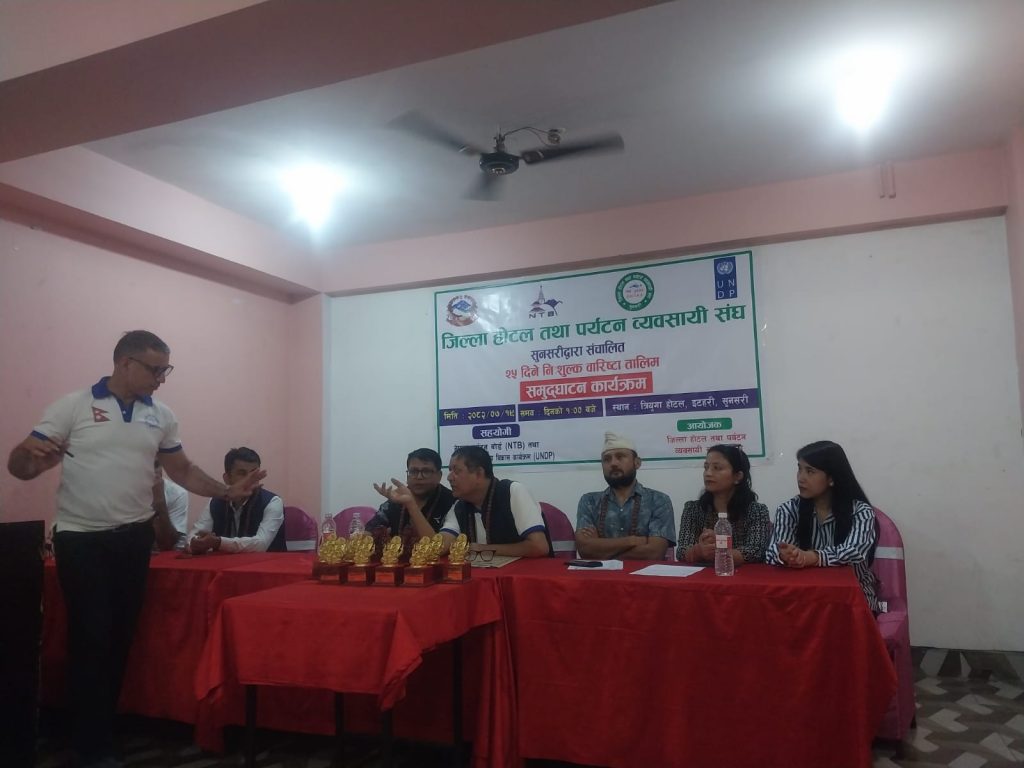
Giri further mentioned that developing professional human resources in the hospitality field was essential to strengthening local tourism and fostering sustainable employment opportunities.
Encouraging Sustainable Employment and Entrepreneurship
Krishna Parajuli, General Secretary of the Association, described the barista training as an important step toward sustainable employment and self-reliant economic growth. He encouraged participants to take the training seriously and utilize their newly gained skills to build careers or start their own ventures. “This program is more than just skill training; it’s an opportunity for youth empowerment and entrepreneurship. By becoming skilled baristas, participants can contribute to promoting the coffee culture and improving service standards in hotels and cafés,” he added.
The training is expected to play a vital role in expanding job prospects for young people in Sunsari and beyond, as Nepal’s hospitality industry continues to diversify beyond traditional tourism models.
Nepal Tourism Board Stresses Capacity Building
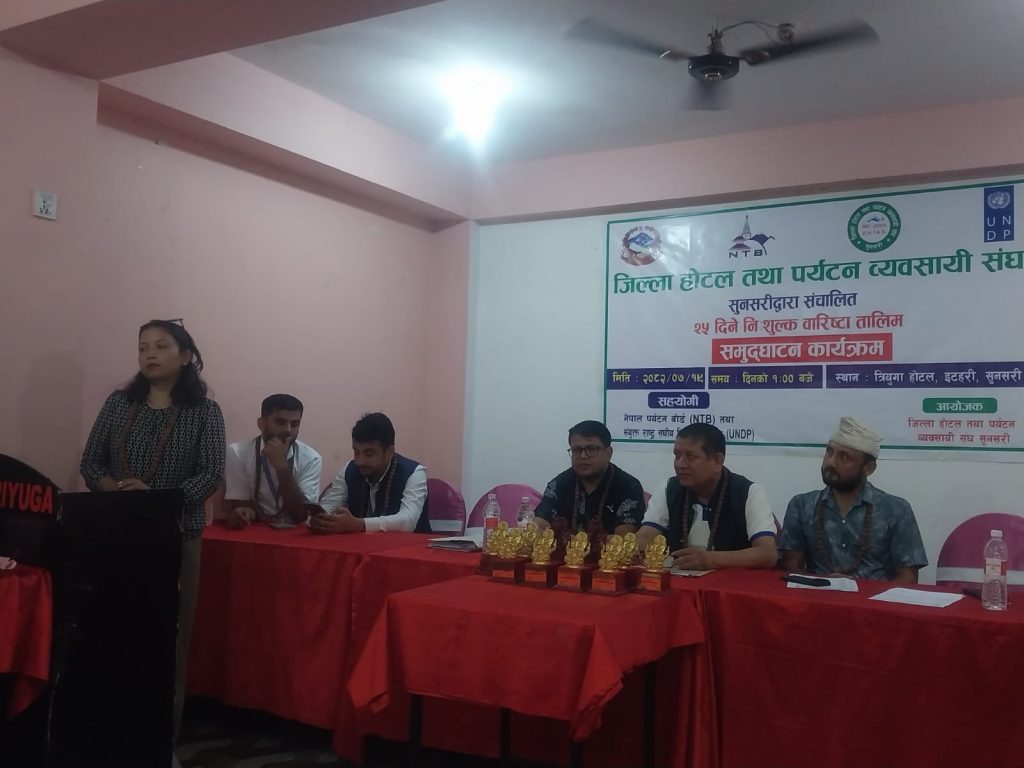
Speaking at the program, Sushila Kumari Baral, Senior Officer at the Nepal Tourism Board, highlighted the importance of skill-based programs in uplifting tourism quality. She noted that the 25-day training would help enhance the capacity and confidence of participants.
“The skills learned through this training will play an important role in promoting Nepal’s hotel and tourism sector,” Baral said. “A well-trained workforce can deliver world-class service, which is crucial to attract both domestic and international visitors.” She added that the NTB’s collaboration with UNDP under the Sustainable Tourism Project reflects a shared commitment to community-based development and inclusive growth in tourism.
Local Government Welcomes Skill Development Initiative
Jitendra Thapa, Ward Chairman of Itahari Sub-Metropolitan City–9, also addressed the ceremony, stating that the barista training would inspire local youth toward entrepreneurship and sustainable tourism development.
“The demand for coffee culture is rising rapidly,” he remarked. “Training like this provides a strong foundation for transforming that trend into a sustainable business opportunity.” Thapa expressed confidence that such programs could reduce youth migration by generating employment within the community itself.
Training Curriculum and Expected Outcomes
The 25-day training includes hands-on sessions on coffee selection, roasting, brewing techniques, espresso preparation, milk texturing, and beverage presentation. Participants will also learn essential customer service skills, hygiene standards, and business management fundamentals related to running a coffee outlet.
Organizers stated that the training would conclude with a final evaluation and certification ceremony, where participants who successfully complete the program will be recognized for their achievements. Certified graduates are expected to find employment in local cafés, hotels, and restaurants or even start their own coffee-based businesses.

Boost to Sustainable Tourism and Local Economy
The District Hotel and Tourism Entrepreneurs Association, Sunsari, believes that such skill-oriented programs not only help in creating direct employment but also enhance the overall quality of services in the hospitality industry. This contributes to making Sunsari and nearby regions more attractive for both domestic and international tourists. “When tourists experience quality service and authentic Nepali coffee culture, they are more likely to stay longer and spend more, which ultimately boosts the local economy,” an organizer noted.
The barista training program in Itahari symbolizes a broader national effort to align Nepal’s tourism growth with skill development, sustainability, and community empowerment. As coffee culture continues to flourish across the country, initiatives like these ensure that local youths are ready to serve as the driving force behind Nepal’s evolving hospitality landscape.