Soaring Again: Paragliding in Pokhara Takes Flight Amid Long Holidays
Despite recent disruptions caused by protests and unfavorable weather, Pokhara’s paragliding industry is gradually reviving, thanks to the long Tihar–Chhath holidays and the surge in domestic tourist arrivals. According to Anil KC, President of the Nepal Air Sports Association (NAA), the influx of visitors during the festive season has had a positive impact on local paragliding businesses.
“Although the tourist season was affected by strikes and bad weather, the Tihar and Chhath holidays, coupled with a rise in domestic tourism in Pokhara, have brought positive momentum to the paragliding sector,” KC said.
Daily Flights Increase to 250
KC informed that around 250 paragliding flights are currently being conducted daily, with operators strictly following safety standards and flight regulations. During the peak tourist seasons before the COVID-19 pandemic, Pokhara used to record over 500 flights per day, making it one of Asia’s most active flight destinations.
However, the sector faced multiple setbacks in recent years, first from the COVID-19 pandemic and later from operational challenges following the opening of the Pokhara International Airport, which led to the relocation of flight zones for safety reasons.
52 Companies and Over 500 Jobs in the Sector
Pokhara is home to 52 registered paragliding companies, employing around 400 licensed pilots, of which 260 are currently active, KC said. The industry provides direct employment to about 500 individuals and indirect opportunities to around 1,500 others, including drivers, photographers, and tourism service providers. According to KC, the paragliding industry in Pokhara has attracted investments worth more than NPR 550 million, reflecting its importance to the local tourism economy.
Shift from Sarangkot Due to Safety Concerns
After the operation of the Pokhara International Airport, paragliding companies were instructed to move their takeoff zones from Sarangkot and Toripani to Mandredhunga, citing safety concerns related to air traffic. The relocation, however, significantly affected operations and reduced the number of flights, leaving many companies struggling to sustain their businesses. “The relocation caused instability in the business. Many operators faced financial challenges, and the number of daily flights dropped sharply,” KC explained.
Flights Resume from Original Landing Site
Recently, in coordination with the Civil Aviation Authority of Nepal (CAAN) and the Nepal Air Sports Association, the companies have been allowed to resume landings at their original sites near Khapaudi (End of the Lake).
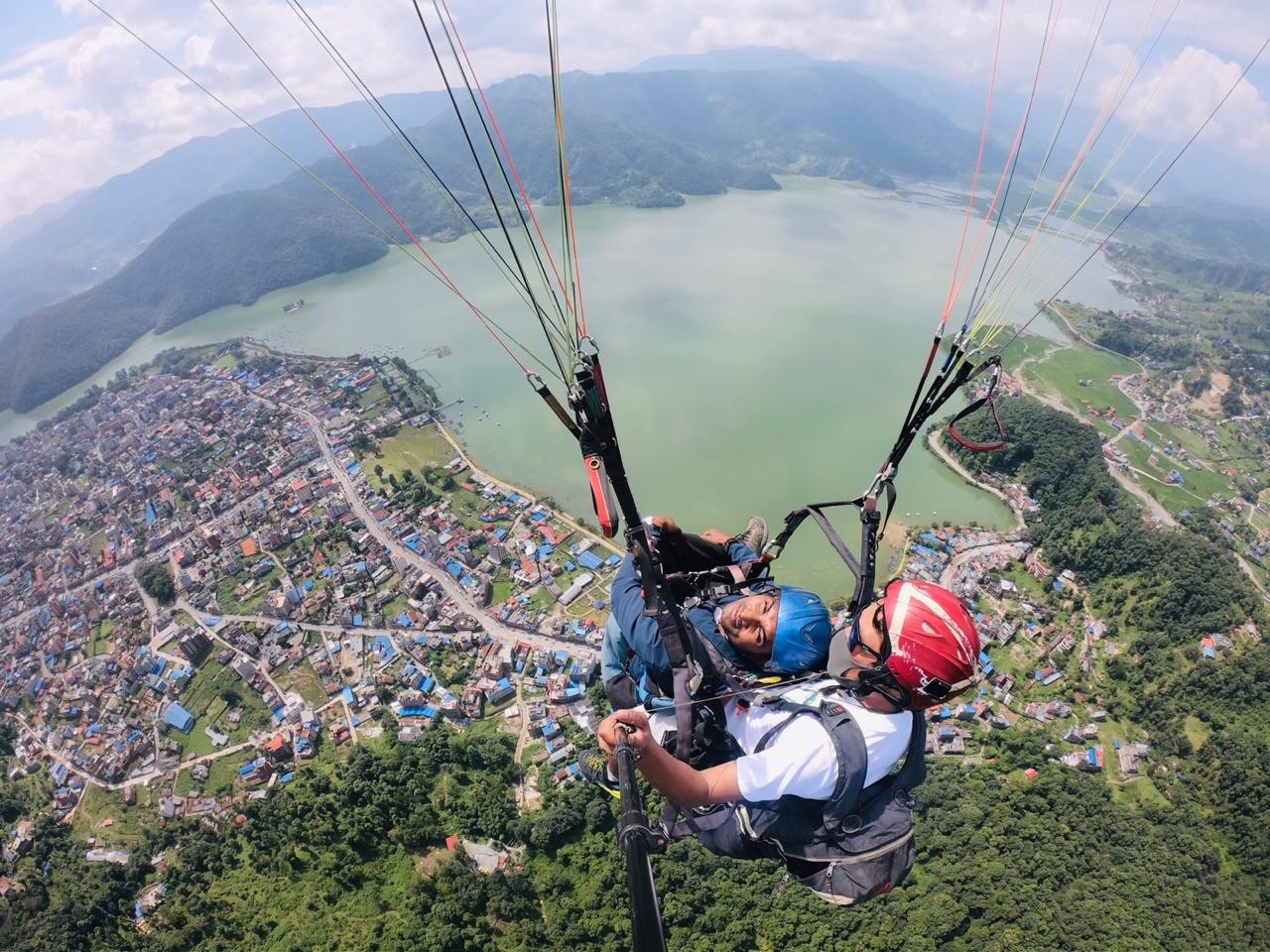
Currently, flights take off from Sarangkot and Toripani (Bahakot) and land at Khapaudi, restoring the traditional paragliding route that once made Pokhara world-famous for its scenic flights over Phewa Lake. “Earlier, conducting paragliding operations was extremely challenging. We struggled to maintain business. But since the partial resumption from Toripani and Sarangkot, flight numbers are increasing gradually,” said Madhav Tiwari, Vice President of the NAA.
According to Tiwari, the flights now operate between 11:00 a.m. and 4:30 p.m. daily, depending on wind and visibility conditions. To attract more domestic tourists, the flight fare has been reduced from NPR 12,000 to NPR 8,500 per person.
Long Legacy of Paragliding in Pokhara
Paragliding was first introduced in Nepal in 1997 by Sunrise Paragliding, which began commercial flights from Sarangkot. Over the decades, Pokhara’s favorable geography, with its steady thermals, clear skies, and panoramic Himalayan backdrop, has made it one of the world’s most popular paragliding destinations.
Under Nepali law, companies wishing to operate paragliding services must obtain permission from the Ministry of Culture, Tourism and Civil Aviation, as well as a RAOC (Remote Area Operations Certificate) from the Civil Aviation Authority of Nepal. These regulations ensure that all operations maintain international safety and technical standards.
Positive Outlook for the Coming Season
With improved coordination among authorities, easing weather conditions, and growing domestic tourism, stakeholders believe Pokhara’s paragliding industry is on the path to recovery.e are optimistic that the upcoming winter season will bring stability and growth,” KC added. “Pokhara remains Nepal’s paragliding capital, and we are committed to ensuring safety and professionalism in every flight.”