In recent years, the Korala border in Rasuwa district has emerged as a growing tourist destination, attracting increasing numbers of domestic visitors annually. The development of the national pride project, the Beni–Jomsom–Korala road, has made travel to this high-altitude border more accessible, contributing to the steady rise in tourist inflow. Situated at an elevation of 4,610 meters above sea level, the northern Korala border serves as the main gateway to Nepal–China trade via the 24th boundary pillar, locally known as the “Jange Pillar.”
Rising Domestic Tourist Numbers
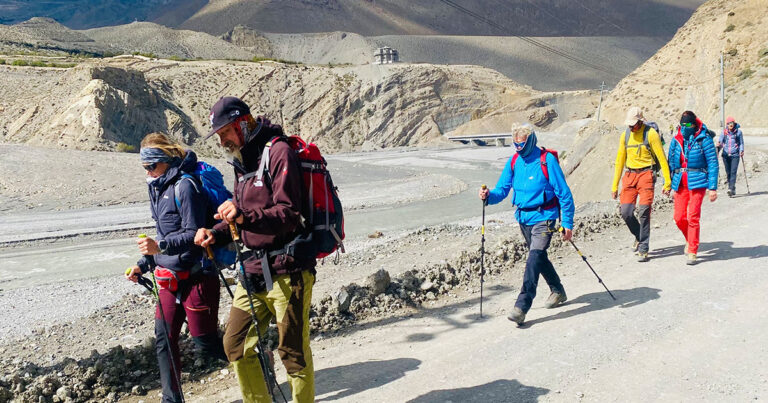
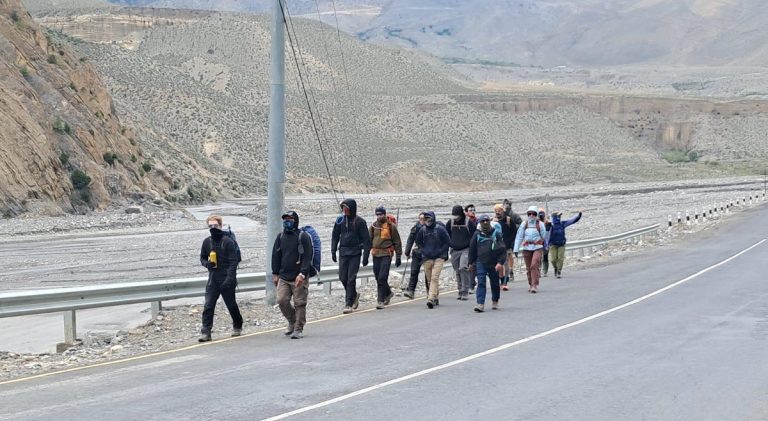
Every year, thousands of domestic tourists visit Korala to witness the high-altitude border and explore surrounding areas. It has been observed that around 50 percent of Nepali tourists visiting Muktinath and Upper Mustang include Korala in their itinerary. Visitors typically commence their journey from Muktinath, proceed to Upper Mustang, and stop at Korala for sightseeing. Unlike domestic tourists, foreign visitors, who pay a $500 entry permit for Upper Mustang, are not allowed to enter the border area due to security considerations.

The District Police Office of Mustang reported that tourism activity at Korala has been increasing, particularly during the Dashain festival period. Despite challenges such as the aftermath of the Gen z movement and recent adverse weather conditions, domestic tourist numbers continue to rise steadily.
Dashain Festival Tourism Surge
According to Chief of Police Chiring Kippa Lama, during the two days of Aswin 17 and 18, 6,173 Nepali tourists and 688 foreign tourists entered Mustang. In the same period, a total of 2,217 vehicles also crossed into the district, highlighting a significant surge in festival-related travel.
The In-Charge of the Armed Police Force Border Outpost (BOP) in Nhechung, Bishnu Hari Thapa, confirmed a sharp increase in domestic tourists visiting the Nepal–China northern Korala border immediately after Dashain. On Aswin 17 and 18 alone, approximately 1,500 Nepali tourists visited the border each day, while on the third day, 1,702 visitors were recorded. At the Nhechung BOP checkpoint, 126 buses, jeeps, and cars, along with 224 motorcycles, accessed Korala.
Challenges at High-Altitude Border
High-altitude conditions and extreme cold have posed challenges for tourists traveling to Korala. Reduced oxygen levels at this elevation can lead to high-altitude sickness, while freezing temperatures may cause vehicle engines to fail. To ensure safety, the BOP has issued a timetable requiring all visitors to enter the border area from 7 a.m. and return by 4 p.m., allowing for better management and emergency response if needed.
Tourism and Local Trade
Domestic tourists visiting Korala often take photographs and videos at the 24th Jange Pillar, proudly hoisting the national flag to commemorate their visit. Alongside sightseeing, tourists also engage with local traders who have set up temporary stalls near the border, purchasing Chinese goods as souvenirs. This growing footfall has been welcomed by traders, who have reported increased business activity due to the influx of Nepali visitors.
However, many tourists express disappointment at the northern view, where China has constructed large-scale infrastructure along the Tibet border for its north-south trade routes. While the Nepali government has fully operationalized Korala as a border point, required infrastructure on the Nepalese side remains incomplete, limiting the facilities available to visitors.

Outlook for Korala Tourism
The development of road connectivity and improved access has significantly contributed to Korala’s rise as a high-altitude tourist attraction. The combination of religious tourism to Muktinath, cultural exploration of Upper Mustang, and border sightseeing continues to draw increasing domestic visitor numbers. Authorities continue to monitor traffic flow, ensure security, and manage high-altitude challenges to provide a safer and more enjoyable experience for tourists.
With ongoing efforts to promote sustainable tourism and enhance local infrastructure, Korala is poised to become an even more popular destination for adventure and cultural tourism, further boosting economic activity in the region.