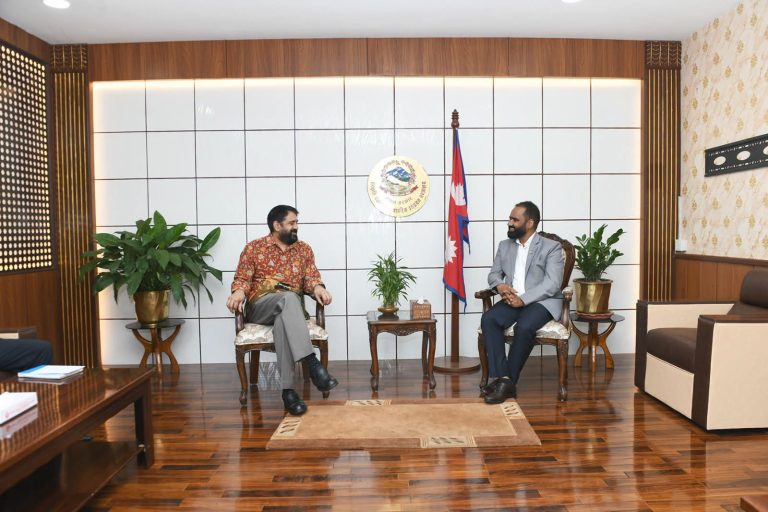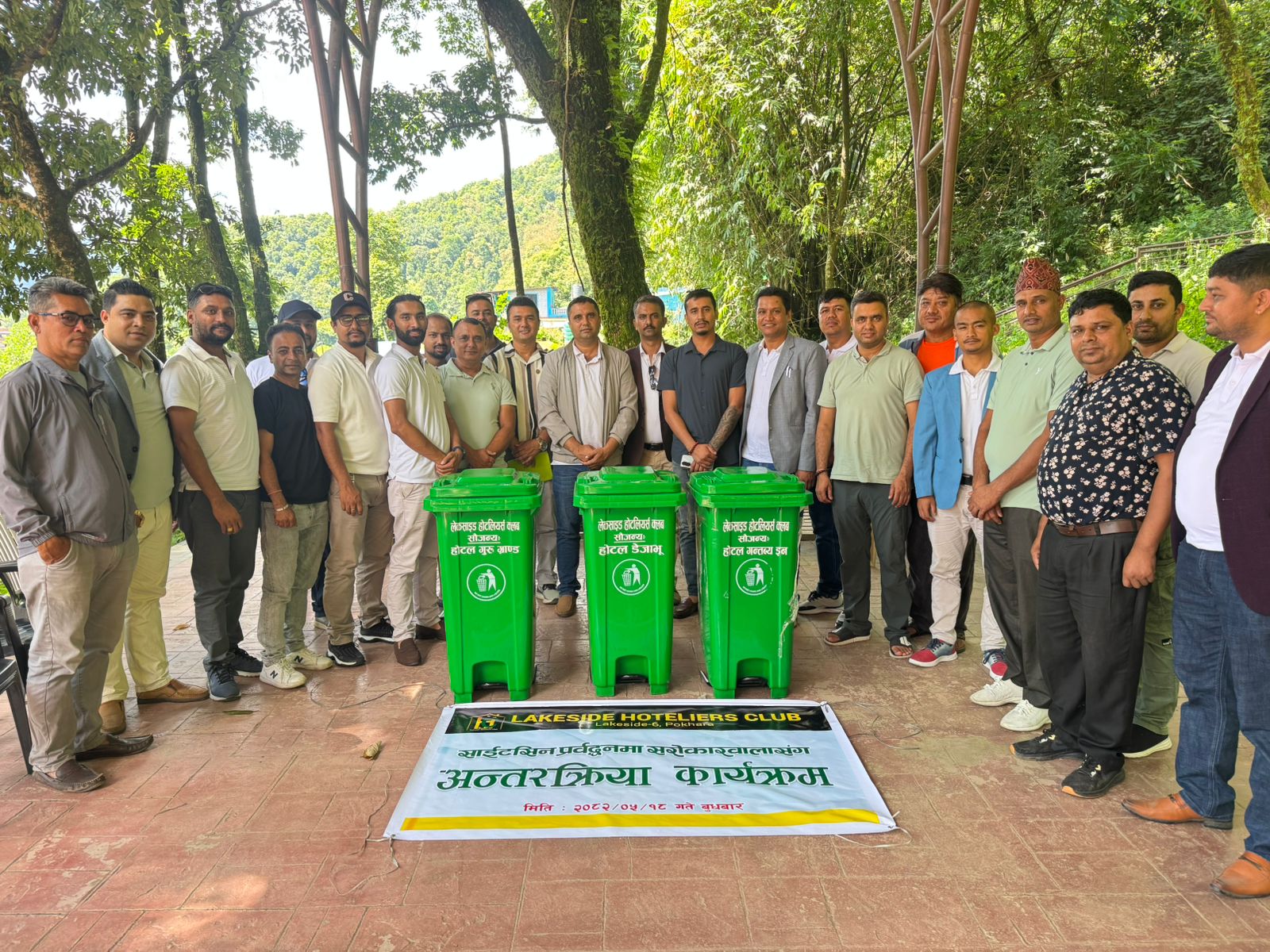
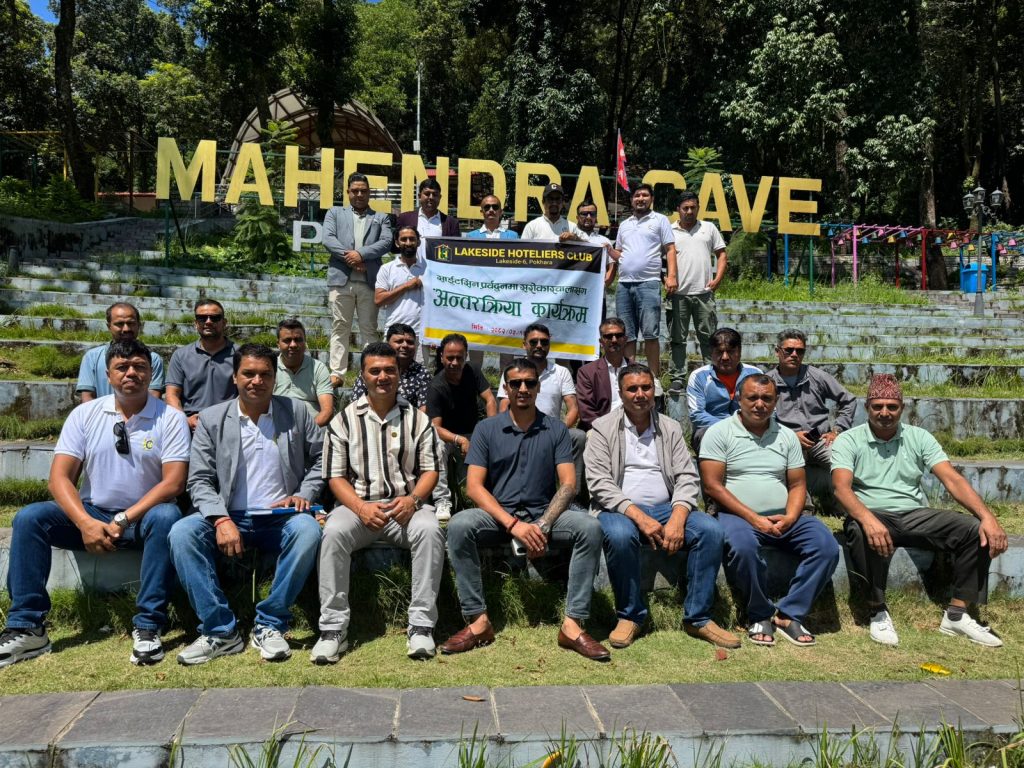
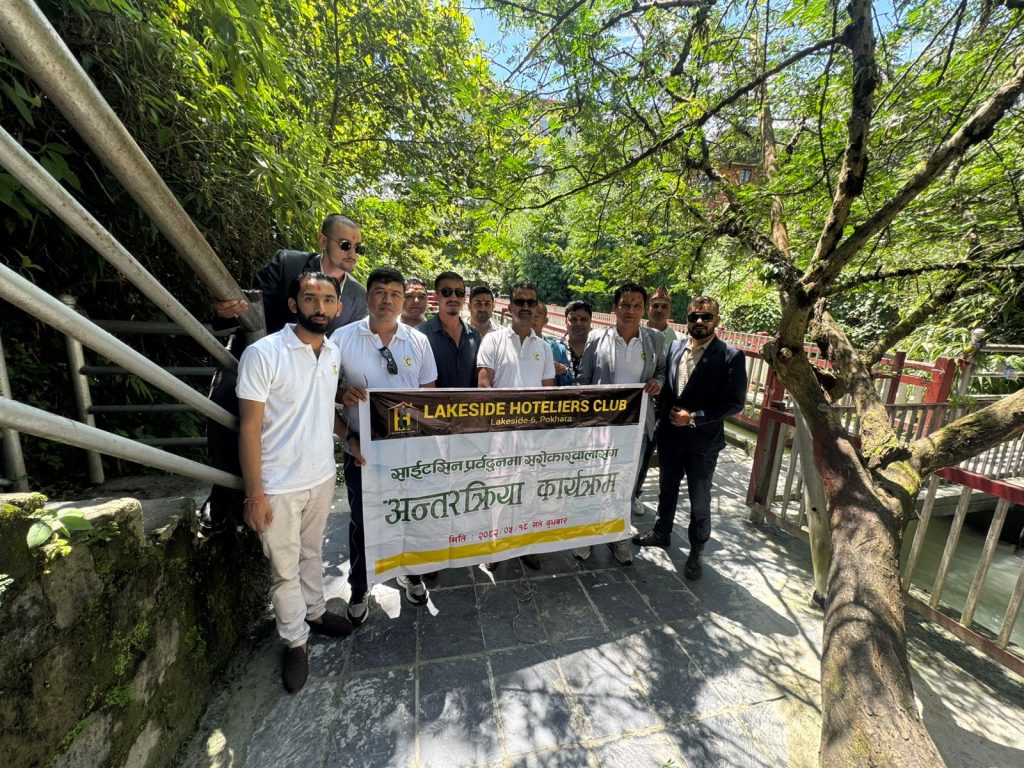
Lakeside Hoteliers Club has successfully completed the first phase of its interaction program aimed at promoting tourism at key tourist sites in Pokhara. The event was held under the chairmanship of the club’s president, Sunil Sharma Paudel. Representatives from local stakeholders, including the Mahendra Cave and Chamero Cave management committees, community organizations, and local authorities, actively participated in the program.
Among the notable attendees were Anil Basnet, Coordinator of the Cave Conservation and Community Development Organization; Ward No. 16 Chairperson Amrit Sharma Timalsina; Sandeep Thapa, Chairperson of Bindabasini Ma.Vi School Management Committee; Principal Krishna Prasad Acharya; former club presidents and advisors; and club members from various hotels in the region.
Focus on Education and Community Development
During the program, the chairperson of the Bindabasini Ma.Vi School Management Committee, Sandeep Thapa, highlighted that the school, funded partially through the income generated from Mahendra Cave and Chameri Cave, currently educates around 1,500 underprivileged and talented students. He proudly noted that the school has achieved the second-highest academic results among community schools nationwide. Thapa also reflected on the COVID-19 pandemic period when tourism activities came to a halt, leading to a significant reduction in teachers and staff. Even with tourism gradually resuming, he mentioned that the expected number of visitors has not yet returned.
Challenges in Local Tourism Promotion
Ward Chairperson Amrit Sharma Timalsina expressed concern over the limited tourist arrivals despite Nepal being sandwiched between two of the world’s most populous countries. He stated that while statistics might show high numbers of tourists, quality tourists who contribute meaningfully to the local economy remain few. He also noted that unhealthy competition among local tourism operators has further impacted business, undermining the growth potential of Pokhara’s tourism sector. Timalsina criticized the lack of sufficient support from provincial and central governments, despite Pokhara being declared the Tourism Capital and the Pokhara Visit Year being announced. He emphasized that all responsible institutions must collaborate to revive and sustain tourism.
Integrating Key Tourist Sites into Travel Packages
Local stakeholders, former club presidents, and advisors highlighted the need to include Mahendra Cave, Chamero Cave, and Seti River as mandatory side points in travel packages offered by hotels and tour operators. This will help create a cohesive and enriching experience for all visitors arriving in Pokhara, ensuring they engage with multiple tourist attractions rather than staying confined to the Lakeside area.
Addressing Tourism Concentration in Lakeside
Milan Jung Kunwar, chairman of Barahi Construction Pvt. Ltd., emphasized that tourists are largely concentrated in the Lakeside area, with many rarely exploring beyond it. He urged local hoteliers and tour operators to actively guide visitors to SetiKhoch and other peripheral attractions, promoting a more balanced distribution of tourism benefits across Pokhara.
Promoting Pokhara on International Platforms
Ishan Khadka, club vice president offered detailed insights into effective marketing strategies for tourism. He emphasized that the promotion of Pokhara’s attractions must go beyond local initiatives. According to Khadka, “We need to work from the local level to the international level. It is not enough for just hoteliers or travel agents to promote the destinations. Local representatives, management committees, and community stakeholders must actively participate in promoting their sites. By organizing collective campaigns and marketing Pokhara’s sites at international platforms, we can attract more tourists, enhance the city’s image, and ensure that visitors experience the full range of Pokhara’s natural and cultural beauty.” Khadka further stressed that international branding of local tourist sites is essential to increase visibility and attract high-quality tourists who can contribute to the local economy.
Infrastructure and Safety Measures for Tourists
Participants in the program also suggested improving tourist safety and infrastructure. Recommendations included establishing first-aid posts at key attractions, maintaining cleanliness, and enhancing the aesthetic appeal of the surroundings. Active involvement of management committees was urged to ensure tourists enjoy a safe and memorable experience. Stakeholders also called on the local government to control disruptions such as strikes and road blockades, which can negatively impact tourism.
Commitment to Collaborative Tourism Promotion
The Lakeside Hoteliers Club reaffirmed its commitment to promoting tourism in all of Pokhara, not just focusing on individual sites. By facilitating interaction between local authorities, community representatives, and tourism operators, the club aims to create a one-door system where visitors can explore multiple sites, extending their stay and contributing more to the local economy. Mahendra Cave Management Committee Chair Mahendra Khadka emphasized that collaboration, addressing weaknesses, and coordinated efforts are the only way forward for sustainable tourism growth in Pokhara.
Community Support and Environmental Awareness
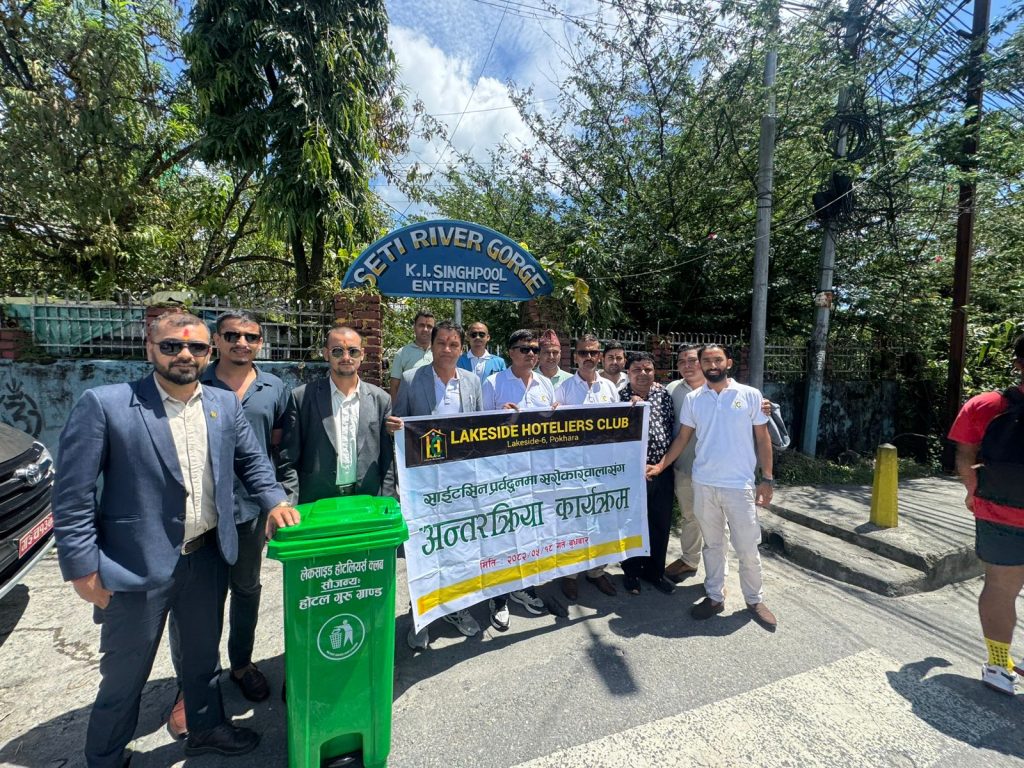
Mahendra Cave Management Committee Chair Mahendra Khadka expressed gratitude for the program, reaffirming the commitment of all stakeholders to jointly promote tourism across Pokhara while addressing existing shortcomings. The program was coordinated entirely by Ishan Khadka, and conducted at the Mahendra Cave premises, where outdoor dustbins were also distributed at Mahendra Cave, Chamero Cave, and the Seti River to promote cleanliness and environmental responsibility.