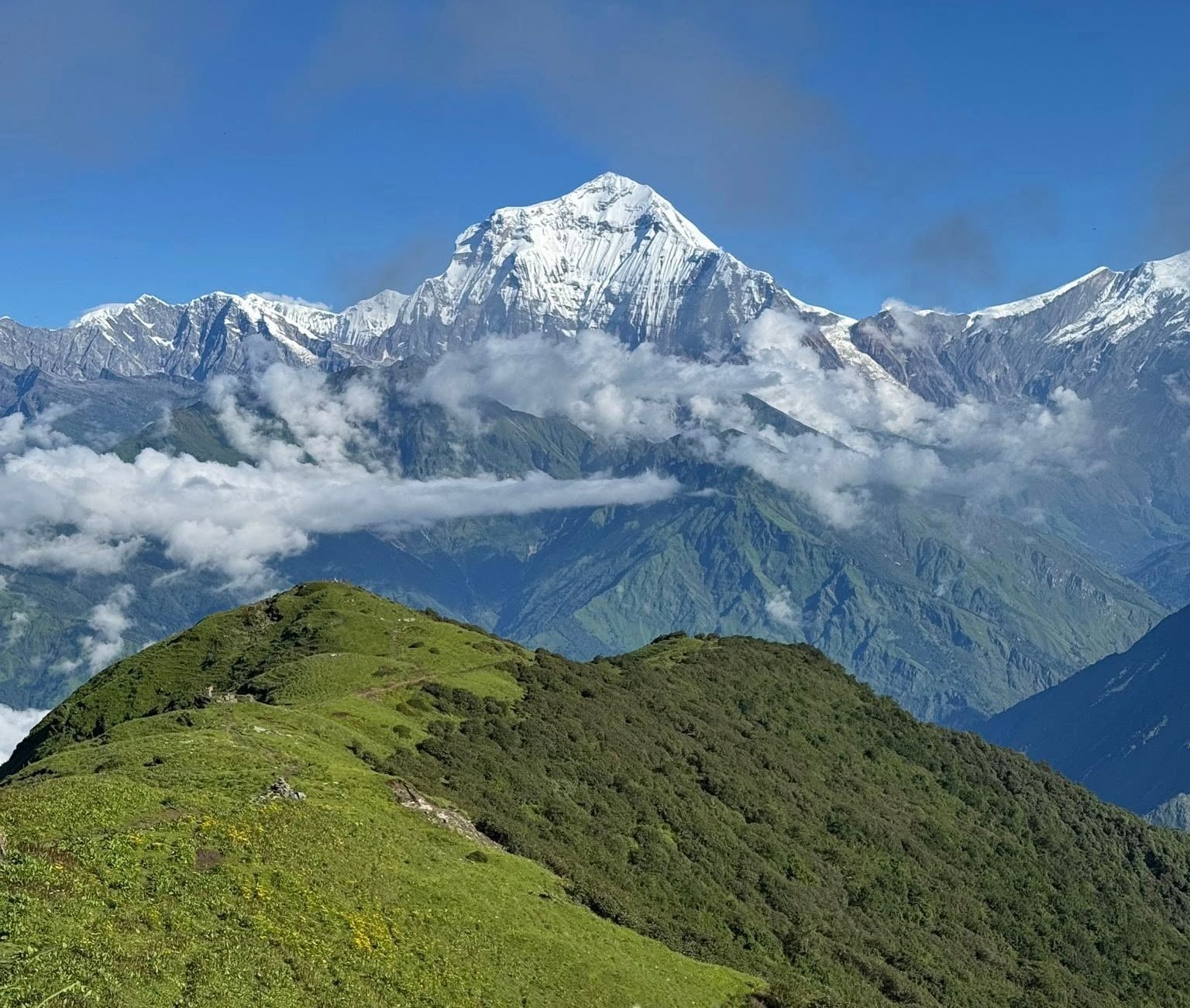
The autumn climbing season of 2025 has officially kicked off in Nepal, and Dhaulagiri, the world’s seventh-highest peak, has once again emerged as one of the most sought-after destinations for mountaineers. According to the Department of Tourism, a total of 24 climbers from different countries have obtained permits to scale Mount Dhaulagiri (8,167 meters), located in Dhaulagiri Rural Municipality–4 of Myagdi district.
With the issuance of these permits, the government has collected a total of Rs. 5.71 million in climbing royalties, also known as the “salami fee.” The department stated that, for this season, climbers aiming for peaks above 8,000 meters except Mount Everest are required to pay a fee of 900 U.S. dollars per person. For smaller peaks, the royalty fee ranges between 125 and 400 U.S. dollars depending on the mountain’s altitude and popularity.

Dhaulagiri’s Place in the Autumn Climbing Season
Although Mount Everest is globally recognized as the ultimate climbing destination, in the autumn season climbers often choose other eight-thousanders. Among these, Manaslu (8,163 meters) located in Gorkha district has become the top favorite. The latest figures show that as many as 374 climbers have secured permits to attempt Manaslu this autumn, placing Dhaulagiri in the second position in terms of climbing permits issued.
Local representatives and tourism entrepreneurs note that Dhaulagiri, despite being less crowded than Manaslu, continues to attract experienced climbers seeking more technical challenges. Hari Prasad Tilija, a ward member of Dhaulagiri-4 who also runs a hotel at the Italian Base Camp, said that climbing teams, along with Sherpas, guides, porters, and support staff, have already started making their way toward the base camp.
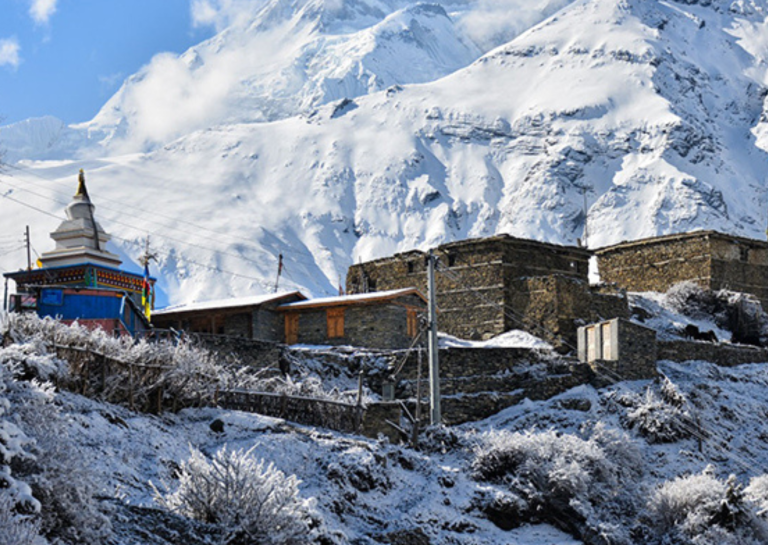
This season, most expeditions are approaching the Dhaulagiri Base Camp via Mustang. Climbers have chosen the route through Marpha and Yak Kharka instead of the traditional path through Myagdi’s Mudi Bagar, as the latter trail has deteriorated over time, becoming longer and more difficult to navigate.
Revenue from Climbing Fees
Climbing expeditions contribute significantly to Nepal’s tourism revenue. In the spring season of 2025, two teams comprising 15 climbers secured permits to climb Dhaulagiri, generating a total of Rs. 3.691 million in royalties. The autumn season, however, traditionally sees higher numbers of climbers attempting peaks other than Everest, boosting the state’s earnings.
Dhaulagiri, being among the most challenging mountains in the Himalayas, often attracts smaller but highly skilled teams. The revenue collected from climbing fees does not only support government coffers but also benefits local communities as climbers and their teams spend on accommodation, food, logistics, and hiring local support staff.
Risks and Challenges of Climbing Dhaulagiri
While Dhaulagiri is popular among experienced mountaineers, it is also infamous for its risks. Compared to other peaks, the mountain is considered technically demanding and prone to sudden weather changes. Avalanches, crevasses, and unstable snow conditions make the ascent highly dangerous.
The dangers of climbing Dhaulagiri were tragically highlighted in the autumn season of 2024, when 14 climbers, all men, secured permits to climb the peak. Among them, five Russian climbers lost their lives after being buried by an avalanche. This incident once again underscored how unpredictable and hazardous the mountain can be.
Climbers, guides, and Sherpas venturing onto Dhaulagiri must contend with constant risks, requiring extensive preparation, technical skills, and resilience. Despite the dangers, the mountain continues to attract climbers drawn to its remoteness and reputation as one of the most adventurous climbs in the world.
A Mountain with Historical Significance
Mount Dhaulagiri carries a rich legacy in the world of mountaineering. The first successful ascent of the mountain was achieved on May 13, 1960, by an Austrian-Swiss-Nepali team led by Kurt Diemberger. Along with Diemberger, the summit team included Peter Diener, Ernst Forrer, Albin Schelbert, Nima Dorje, and Nawang Dorje. Their accomplishment marked a historic milestone, cementing Dhaulagiri’s reputation as a formidable yet achievable challenge for mountaineers.
Since that first ascent, Dhaulagiri has witnessed numerous expeditions, triumphs, and tragedies. The mountain has become a symbol of courage and endurance, representing both the glory and the perils of high-altitude climbing.
Local Perspectives and Economic Benefits
For the residents of Myagdi and Mustang, the climbing season is not just about mountaineering glory, it is also a source of livelihood. Porters, hoteliers, guides, and yak herders benefit directly from the influx of climbers and trekkers. The choice of the Mustang route this year has also boosted local businesses in Marpha and nearby villages.
According to local authorities, the tourism sector in the region sees a significant seasonal boost during climbing seasons, as hundreds of support staff accompany climbers, increasing demand for food supplies, transportation, and accommodation. This ripple effect supports both the local and national economy.

Looking Ahead
As autumn expeditions unfold, the focus will be on whether climbers attempting Dhaulagiri can safely reach the summit without major accidents. The government, meanwhile, has reiterated its commitment to ensuring that climbing activities are properly regulated and that climbers follow safety protocols.
For now, the 24 climbers who have received permits this season carry not just their personal ambitions but also the hopes of local communities and Nepal’s broader tourism industry. If successful, their expeditions will add to the legacy of Dhaulagiri as a peak that continues to challenge and inspire adventurers from around the globe.