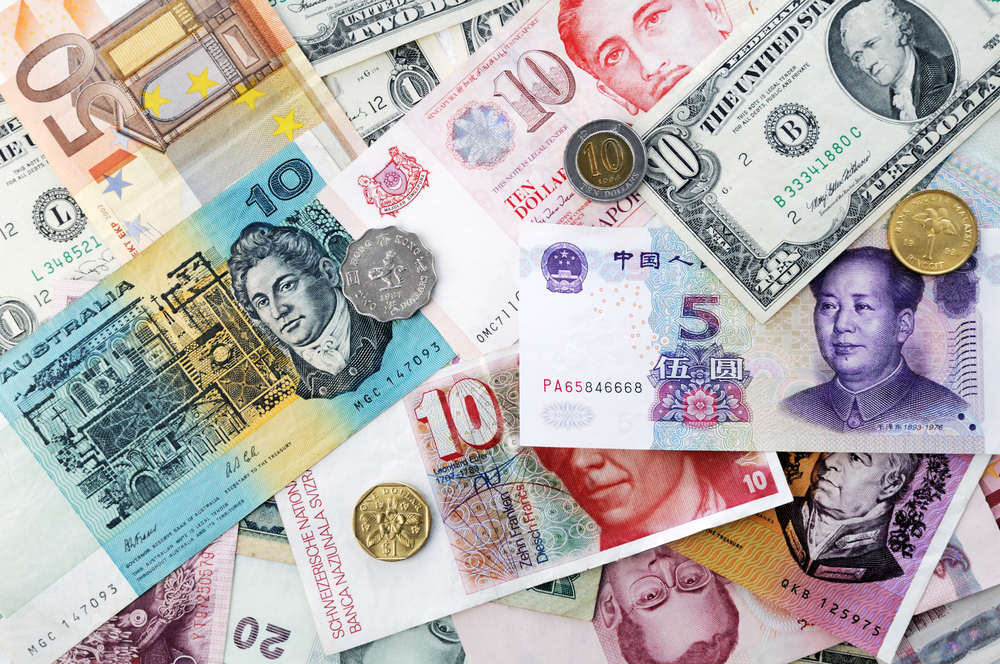
The Nepal Rastra Bank (NRB), the central bank of Nepal, has announced the updated foreign exchange rates for today, setting new buying and selling rates for major international currencies. These rates are applicable across the banking and financial system for foreign currency transactions, remittances, and trade settlements. The central bank revises exchange rates daily, reflecting the ongoing fluctuations in the global financial market and regional currency movements.
U.S. Dollar and Major Western Currencies
According to today’s bulletin issued by the Nepal Rastra Bank, the U.S. Dollar has been fixed at Rs. 141.74 for buying and Rs. 142.34 for selling. The U.S. Dollar remains one of the most influential currencies in Nepal’s foreign trade and remittance sectors, with even slight changes in its rate directly impacting import costs and remittance values.
Similarly, the European Euro stands at Rs. 165.25 for buying and Rs. 165.95 for selling, while the British Pound Sterling has been valued at Rs. 190.00 for buying and Rs. 190.81 for selling. Both the Euro and the Pound continue to remain strong against the Nepali Rupee, driven by stable economic conditions in Europe and the United Kingdom. The Swiss Franc, known for its global financial stability, is valued at Rs. 177.55 for buying and Rs. 178.30 for selling.

Rates of Popular Currencies from Asia-Pacific Region
Among the Asia-Pacific currencies, the Australian Dollar has been set at Rs. 93.38 (buying) and Rs. 93.77 (selling), while the Canadian Dollar is valued at Rs. 101.56 (buying) and Rs. 101.99 (selling). Both currencies are important for Nepal due to the growing Nepali diaspora and student communities residing in Australia and Canada, whose remittances contribute significantly to Nepal’s foreign income. The Singapore Dollar, another major trading currency in the region, is being exchanged at Rs. 109.59 for buying and Rs. 110.05 for selling.
In East Asia, the Japanese Yen is quoted at Rs. 9.39 (buying) and Rs. 9.43 (selling) per 10 units. Meanwhile, the Chinese Yuan has been valued at Rs. 19.91 for buying and Rs. 19.99 for selling. Both Japan and China play crucial roles in Nepal’s trade, investment, and development partnerships, making their currency trends particularly significant.
Exchange Rates for Gulf Countries and Neighboring Nations
The Saudi Arabian Riyal, one of the most used currencies for remittances from Nepali migrant workers, has been set at Rs. 37.79 (buying) and Rs. 37.95 (selling). Similarly, the Qatari Riyal is valued at Rs. 38.89 for buying and Rs. 39.05 for selling.
The UAE Dirham stands at Rs. 38.59 for buying and Rs. 38.75 for selling, while the Omani Riyal is traded at Rs. 368.14 (buying) and Rs. 369.70 (selling). The Bahraini Dinar, one of the most valuable currencies in the Gulf region, is fixed at Rs. 375.99 for buying and Rs. 377.58 for selling. Likewise, the Kuwaiti Dinar, known as the world’s strongest currency, is valued at Rs. 462.70 (buying) and Rs. 464.65 (selling).
These Gulf currencies hold major importance for Nepal, as a significant number of Nepali workers in the Middle East send remittances in these currencies, directly influencing Nepal’s foreign currency reserves and national economy.
Regional Currencies and South Asian Exchange Rates
Among regional currencies, the Indian Rupee (INR) remains pegged at Rs. 160.00 (buying) and Rs. 160.15 (selling) per 100 Indian Rupees. Since the Nepali Rupee is directly linked to the Indian Rupee, its value remains relatively stable compared to other international currencies. This exchange rate plays a key role in cross-border trade and tourism between Nepal and India.
Other Asian currencies include the Thai Baht, with a rate of Rs. 4.36 for buying and Rs. 4.37 for selling, and the Malaysian Ringgit, which stands at Rs. 33.63 (buying) and Rs. 33.77 (selling). The South Korean Won (100 units) is exchanged at Rs. 10.03 (buying) and Rs. 10.07 (selling). In the Scandinavian region, the Swedish Kroner is valued at Rs. 15.10 (buying) and Rs. 15.16 (selling), while the Danish Kroner has been fixed at Rs. 22.13 for buying and Rs. 22.23 for selling.

Central Bank’s Flexibility and Caution
The Nepal Rastra Bank has clarified that these exchange rates are indicative and may be revised at any time as per market requirements. The rates set by individual commercial banks may differ slightly depending on real-time market demand and supply conditions. NRB further advised individuals and businesses to check the official website of the central bank for the latest and most accurate exchange rate updates before carrying out foreign transactions.
The fluctuation of foreign currencies against the Nepali Rupee is influenced by multiple factors, including global economic trends, oil prices, inflation rates, and international trade policies. The central bank monitors these dynamics closely to ensure economic stability and a balanced foreign exchange environment.
The newly published foreign exchange rates reflect Nepal’s ongoing adaptation to global financial movements. As remittances, imports, and exports continue to shape the nation’s economic framework, such daily updates from the central bank remain critical for businesses, travelers, and financial institutions alike.