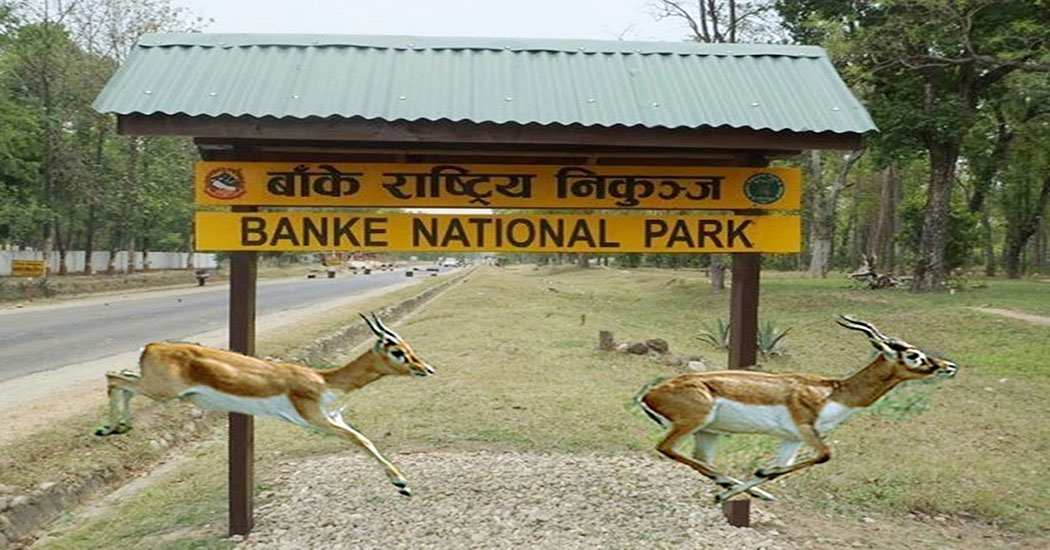
Banke National Park is witnessing a remarkable increase in both domestic and foreign visitors, following the launch of dedicated jungle safari services by the local tourism operators. The initiative, led by Gabhar Valley and Mini Gabhar Community Homestays in Baijnath-1 Chisapani, has attracted nature enthusiasts eager to explore the park’s rich biodiversity and an unique wildlife.
Community Homestays Drive Safari Tourism
Tourism entrepreneurs report a noticeable rise in the visitor numbers after the two community homestays introduced safari jeep services, providing tourists with enhanced access to the park’s wildlife. This development has transformed Banke National Park into a bustling tourism destination, drawing the visitors from across Nepal and nearby Indian cities such as Lucknow and Bahraich.

Most tourists currently stay in star hotels in Nepalgunj and Kohalpur, while others prefer homestays and resorts in Baijnath and Rapti Sonari rural municipalities, benefiting the local communities.
High Demand for Safari Experiences
“We only have limited jeeps, so priority is given to those who book in the advance,” said Baburam Chaudhary, operator of Mini Gabhar Community Homestay. He noted that the domestic tourists often visit on weekends, while foreign visitors are particularly excited to spot a tiger in its natural habitat. The popularity of the safari has encouraged other tourism stakeholders, including NATTA Banke, to consider launching the additional safari jeeps.
Chaudhary explained that the increasing demand led both Gabhar Valley and Mini Gabhar Community Homestay to operate two safari jeeps. Tourists usually arrive in groups of 25–30 people daily, with the major contributors from Nepali cities like Kathmandu, Butwal, Dang, and Surkhet.
Immersive Cultural and Wildlife Experience
Visitors staying at the homestays enjoy not only wildlife experiences but also a cultural immersion in Tharu traditions. The homestays offer various packages:
- Four-hour jungle safari: Rs 12,000
- Eight-hour jungle safari: Rs 16,000
- Overnight forest stay packages with accommodation and meals
Many tourists prefer the comprehensive safari with overnight forest stay, combining adventure and cultural exposure. Recently, an American tourist enjoyed a night at Kareli Machan inside the park, spotting wild animals including leopards, chitals, wild boars, and four-horned antelopes.
Strategic Location Boosts Accessibility
Shriram Sigdel, former chairman of NATTA Banke, emphasized the park’s strategic location, just 22 kilometers from Nepalgunj, making it highly accessible for visitors. “With the road inside the park now open, it’s easier than ever to enjoy a safari and witness the wildlife,” he said. Sigdel also highlighted the park’s potential to attract Indian tourists due to the open border, pointing out growing enthusiasm among local tourism operators.
Private Investment Supports Tourism Growth
Birendra Kandel, head of Banke National Park, confirmed the rising influx of visitors and noted that private investment in safari operations has contributed to this growth. He indicated that such partnerships are vital to ensuring sustainable tourism development while preserving the park’s natural resources.

Conservation Goals and Park Significance
Established on July 12, 2010, as Nepal’s 10th national park, Banke National Park spans 550 square kilometers across Banke, Dang, and Salyan districts. Its creation reflects the Government of Nepal’s commitment to tiger conservation, aiming to protect tiger habitats, maintain biodiversity, and secure ecological corridors for wildlife.
The park’s increased tourism, driven by well-managed safari services and community involvement, not only boosts the local economy but also raises awareness about conservation efforts among domestic and international visitors.
With improved infrastructure, community participation, and growing interest from both domestic and foreign tourists, Banke National Park is emerging as a premier destination for wildlife tourism in Nepal. The success of the Gabhar Valley and Mini Gabhar homestay initiatives highlights the potential for community-based ecotourism, ensuring both economic benefits and environmental preservation.