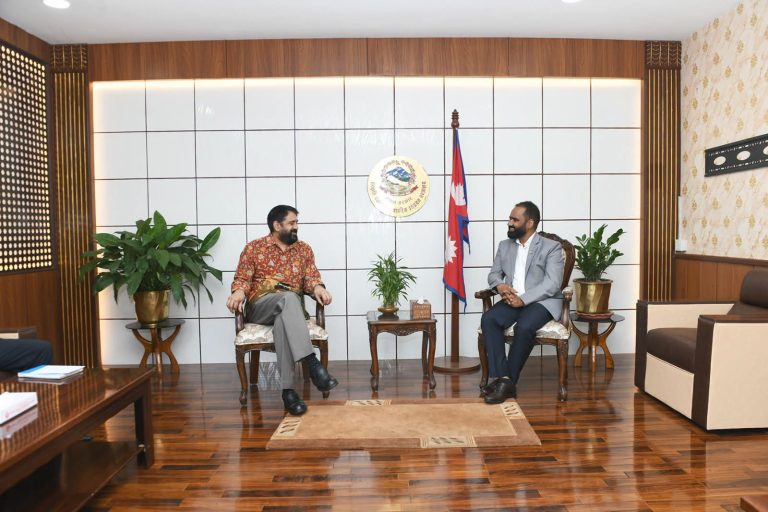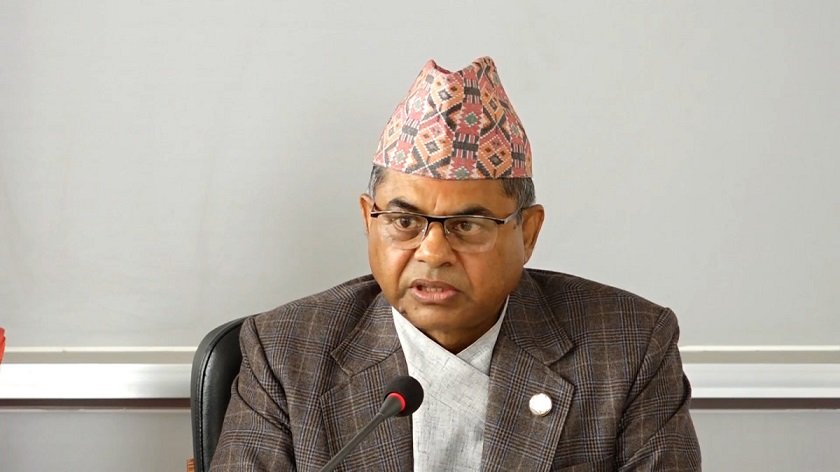
Minister for Culture, Tourism, and Civil Aviation, Anil Kumar Sinha, has stated that it would not be appropriate to grant monopoly rights to the Nepal Mountaineering Association (NMA), emphasizing that Nepal’s evolving federal structure and legal framework do not support exclusive authority for a single institution in the mountaineering sector.
The minister made the remarks while responding to lawmakers’ questions during a meeting of the Legislation Management Committee under the National Assembly held at Singha Durbar on Monday.

Monopoly Not Suitable in Federal Context
Minister Sinha explained that under the current federal system and the country’s changed political and administrative context, establishing laws that provide monopoly rights to a single organization would be inappropriate. He pointed out that the Nepal Mountaineering Association is registered under the Institutions Registration Act, which allows any eligible group of citizens to register similar organizations.
“Since other citizens also have the legal right to register institutions under the same act, it would not be fair or legally sound to provide exclusive authority to only one organization,” he said.
Presence of Multiple Mountaineering Institutions
The minister highlighted that several organizations are currently working in Nepal’s mountaineering sector, including the Nepal Mountain Academy, which was established by the Government of Nepal, and the National Mountain Guide Association, along with other training institutions.
He stressed that with multiple active organizations contributing to the sector, it would be impractical to move forward with a framework that grants monopoly rights to a single association.
Acknowledging NMA’s Contributions
Despite ruling out monopoly status, Minister Sinha praised the Nepal Mountaineering Association for its remarkable and invaluable contributions to the country’s mountaineering sector.
“The role played by the Nepal Mountaineering Association so far has been truly commendable. They have carried out very good work for the development of mountaineering in Nepal,” he said.
He also mentioned that while he had not yet reviewed all historical legal amendments related to the association’s establishment and operational framework, it is evident that the NMA began as a small initiative under the Institutions Registration Act and has since grown into a major contributor to Nepal’s mountain tourism industry.
Call for Wider Discussion
Minister Sinha further stated that the issue of monopoly has been raised in public discourse, prompting the need for broader discussion among lawmakers and stakeholders.
“Considering the changed political landscape and federal governance system, concerns have been raised regarding the possibility of a monopoly. Therefore, I have placed this matter before honorable members for discussion,” he added.
Implications for Nepal’s Mountaineering Sector
Nepal’s mountaineering sector is a vital pillar of its tourism industry, attracting climbers, trekkers, and adventure enthusiasts from around the world. The presence of multiple institutions involved in training, certification, and expedition facilitation is seen as crucial for ensuring competition, quality improvement, and safety standards.

Minister Sinha’s remarks signal a policy direction that encourages institutional plurality, fair competition, and inclusive growth rather than centralized control, aligning with Nepal’s broader federal governance principles.
While acknowledging the Nepal Mountaineering Association’s historical contributions and continued importance, the government has made it clear that Nepal’s mountaineering sector will not be governed by monopoly-based legislation. Instead, the focus will remain on fostering a diverse and competitive institutional environment that supports sustainable growth, professional standards, and equitable opportunities within the country’s mountain tourism ecosystem.