Holi, widely known as the Festival of Colours, is one of the most vibrant and cherished celebrations in South Asia. Observed primarily in Nepal and India, the festival marks the arrival of spring, the end of winter, and the blossoming of joy, love, and togetherness. Celebrated on the full moon day (Purnima) of the Hindu month of Phalguna, usually falling in mid-March, Holi lasts for a night and a day. It is a time when social barriers dissolve, communities unite, and people of all ages gather to celebrate life with colours, music, and festivity.
Mythological Origins and Sacred History
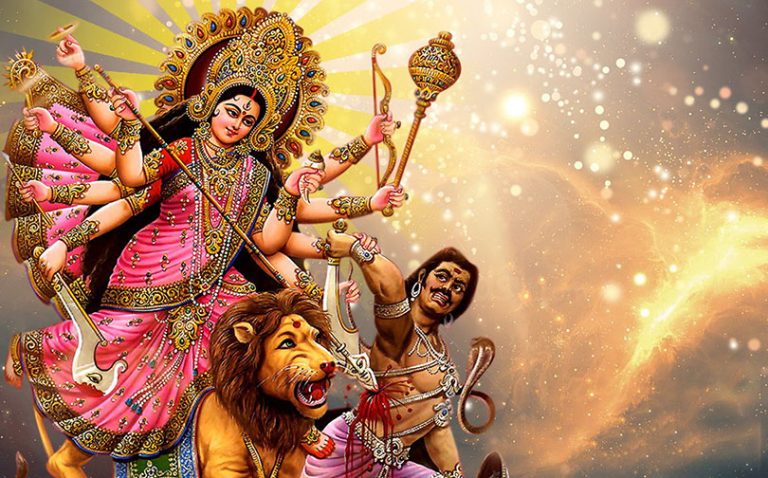
The roots of Holi are deeply embedded in Hindu mythology and spiritual tradition. One of the most significant legends associated with the festival is the story of Prahlad, a devoted follower of Lord Vishnu. Prahlad’s father, Hiranyakashipu, was a powerful but arrogant king who demanded to be worshipped as a god. When Prahlad refused and continued his devotion to Vishnu, the king plotted to kill him with the help of his sister Holika, who possessed a magical boon that made her immune to fire.
Holika sat with Prahlad in a blazing fire, intending to destroy him. However, due to Prahlad’s unwavering faith, he emerged unharmed while Holika was consumed by the flames. This event symbolizes the victory of righteousness over evil and is commemorated through the ritual of Holika Dahan, the ceremonial bonfire lit on the eve of Holi.
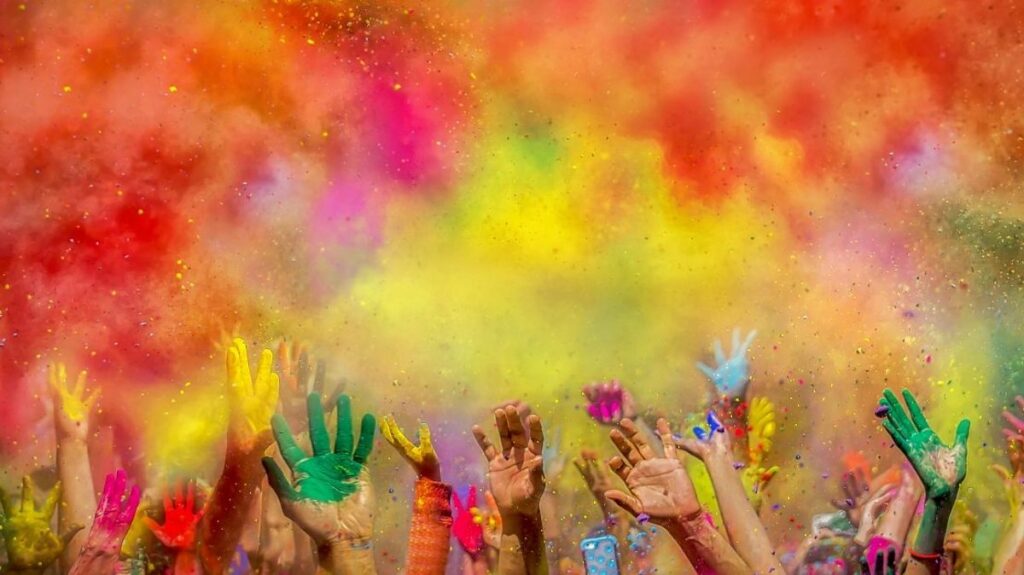
Another theological dimension of Holi celebrates the divine love between Radha and Krishna. Their playful exchange of colours is believed to have inspired the joyful traditions of throwing coloured powders. The festival also recalls the triumph of Lord Vishnu’s incarnation as Narasimha, who destroyed Hiranyakashipu to restore cosmic balance and protect devotion.
Rituals and Celebration: From Fire to Colour
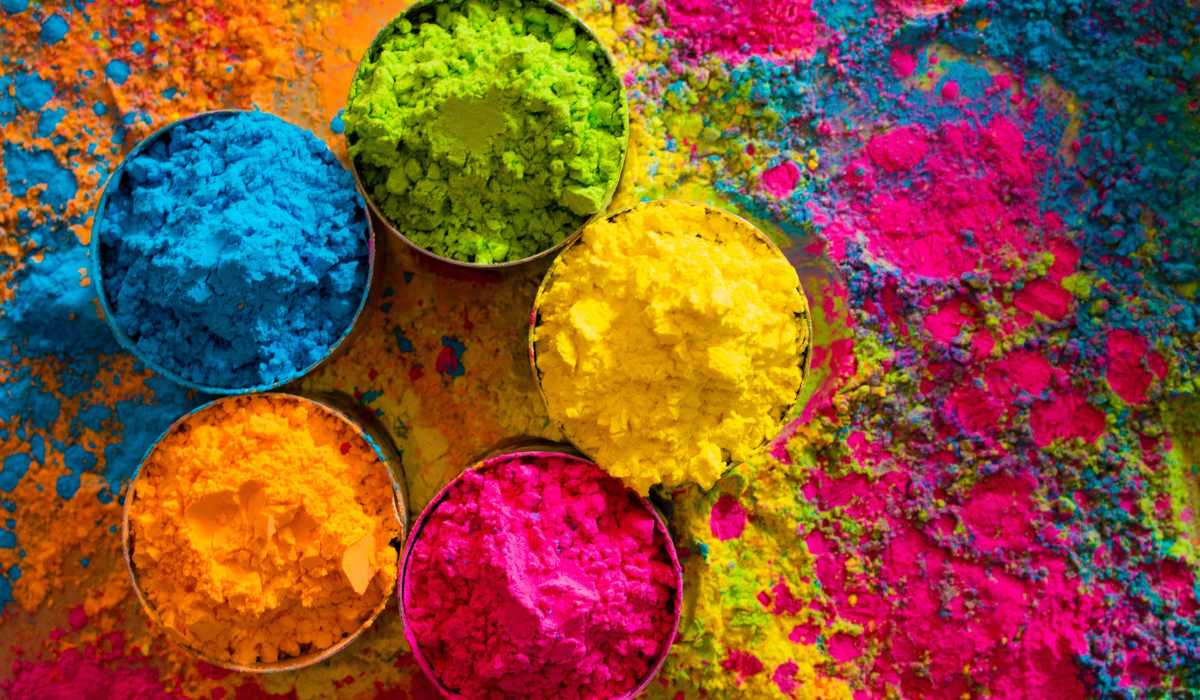
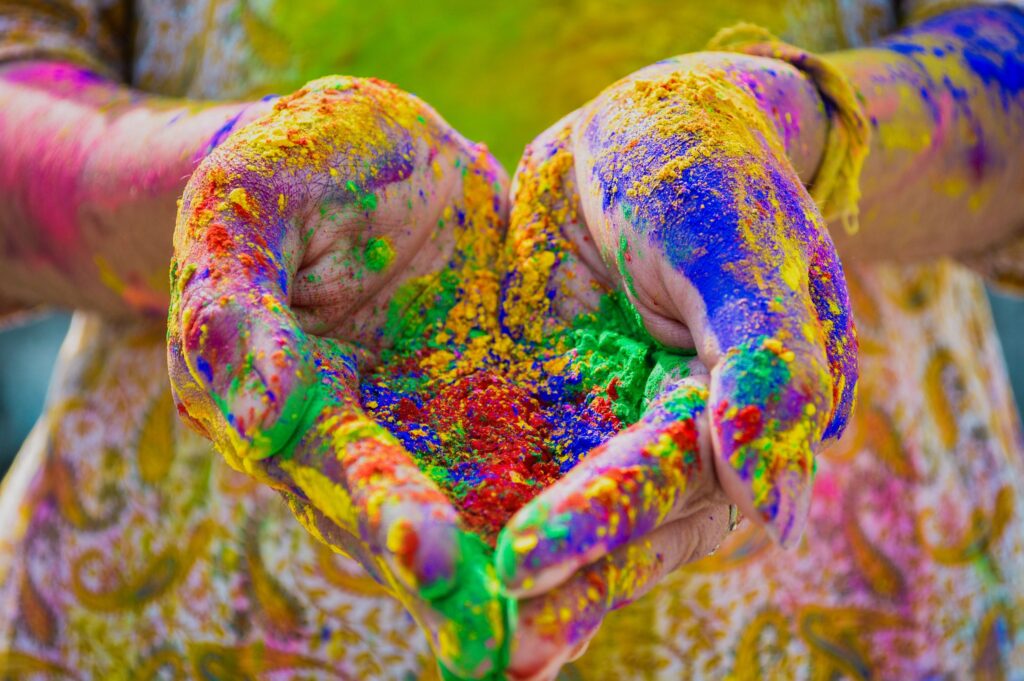
The festival begins with Holika Dahan, when families and communities gather around bonfires to offer prayers, sing devotional songs, and symbolize the burning away of negativity. The following day transforms into an explosion of colour and celebration. Streets, courtyards, and public spaces fill with people smearing each other with red, pink, yellow, and green powders known as abir and gulabi. Water-filled balloons and traditional sprinklers called pichkaris add to the playful spirit.
The colours of Holi carry symbolic meanings: red for love and fertility, yellow for prosperity and turmeric’s healing power, green for new beginnings, and blue for divine energy. Beyond the visual spectacle, Holi represents forgiveness, renewal of relationships, and the breaking down of social divisions.
Holi in Nepal: Devotion and Community Spirit
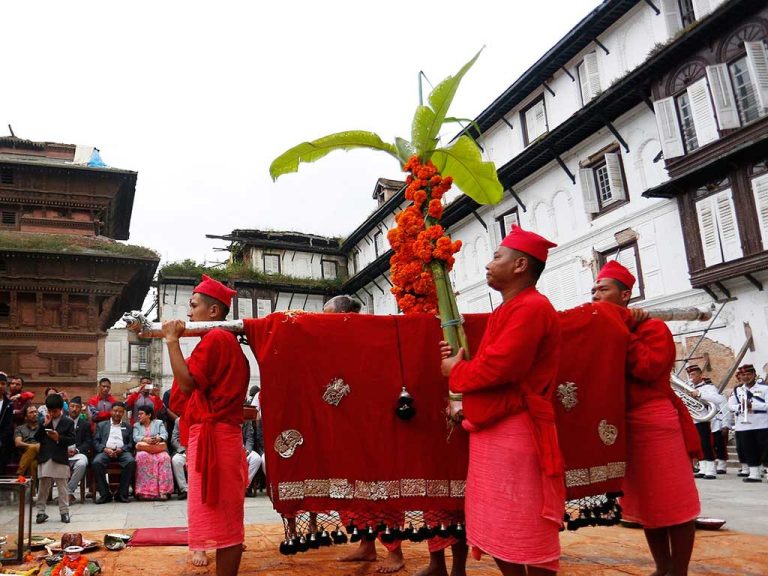
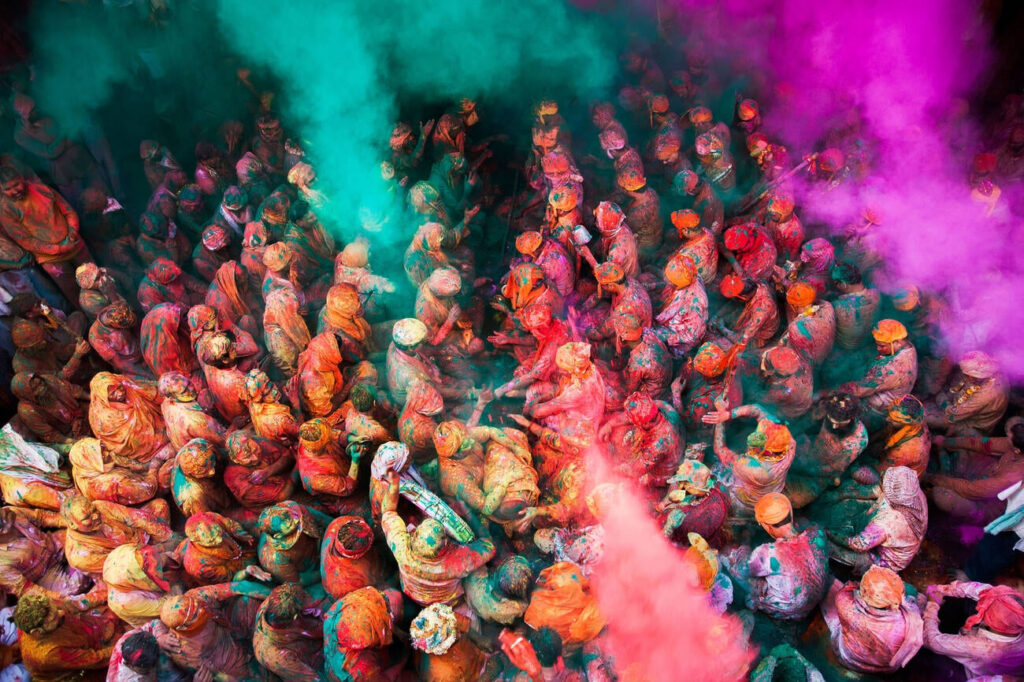
In Nepal, Holi, often called Fagu Purnima, is celebrated with immense enthusiasm and devotion. The festival begins with the raising of the ceremonial chir (a decorated bamboo pole) in Kathmandu, followed by Holika Dahan. The next day, towns and villages come alive with music, dancing, and colour play as families, friends, and even strangers share laughter and festive greetings.
In the Terai region, celebrations are especially grand, with processions, folk performances, and community feasts lasting longer than in the hills. The festival’s inclusive nature allows people of diverse backgrounds to participate, reflecting harmony and shared cultural identity.
Mithila Traditions and the Pilgrimage Connection
In the ancient cultural region of Mithila, the festival takes on unique spiritual and musical dimensions. Devotional journeys and parikrama (pilgrimage circuits) blend religious observance with colourful celebration. Pilgrims traveling through areas such as Mahottari and Kanchanwan sing traditional Fagu songs that describe divine play and joy.
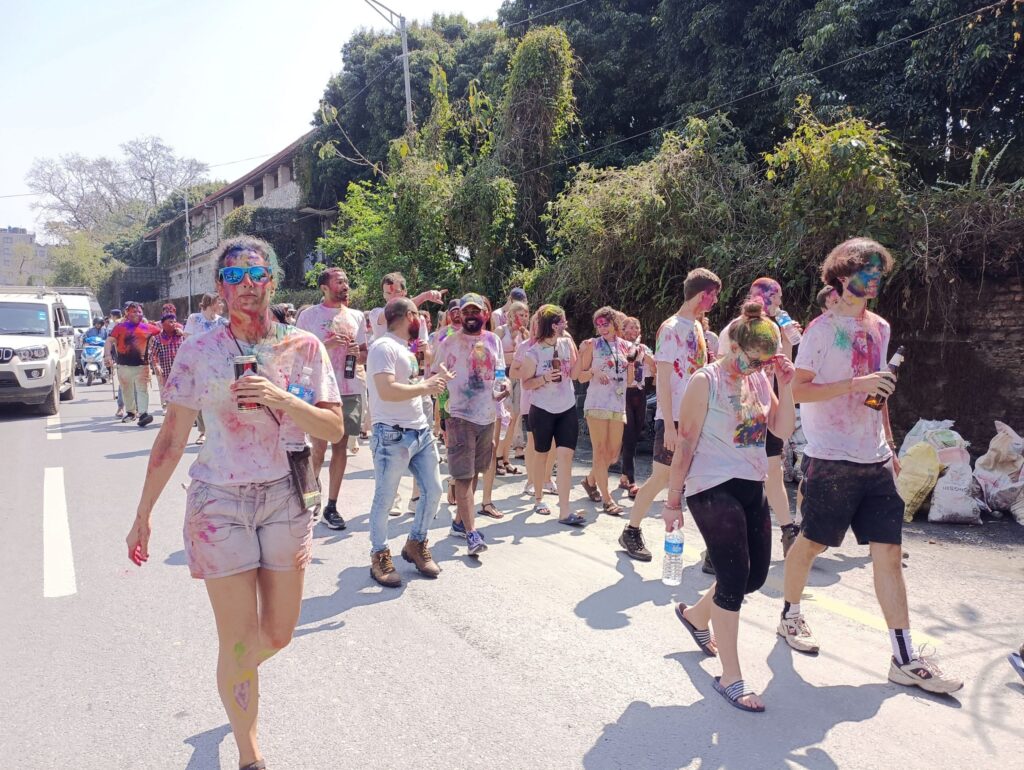
These songs often recall the playful Holi of Rama and Sita, with lyrical exchanges sung in groups. The rhythmic call-and-response style fills the air with devotion and celebration, transforming the pilgrimage into a living cultural performance. For pilgrims, the journey is both spiritual and festive, an expression of liberation, faith, and shared humanity.
A Festival that Welcomes the World
Over time, Holi has spread far beyond the Indian subcontinent through diaspora communities. Today, it is celebrated in cities across Asia, Europe, and the Americas, where people gather in parks, temples, and community centers to recreate the joyous traditions. For Nepali communities abroad, Holi serves as a bridge to their homeland, allowing them to reconnect with their heritage while sharing their culture with others.
International visitors are increasingly drawn to Nepal during Holi to experience its authenticity. Tourists eagerly participate in colour play, enjoy Nepali music and cuisine, and witness rituals that carry centuries of meaning. The festival thus becomes a platform for cultural exchange, where locals and visitors celebrate side by side.
Symbolism and Contemporary Relevance
Though rooted in mythology, Holi’s message remains profoundly relevant today. It is a celebration of renewal, of nature as spring arrives, of relationships through forgiveness, and of society through unity. The act of applying colour to another person erases distinctions of caste, class, age, or nationality, reminding participants of shared humanity.
Holi also encourages joy as a spiritual value. The laughter, music, and playful atmosphere are not merely entertainment but expressions of gratitude for life and community. In an increasingly fast-paced world, the festival offers a moment to reconnect with nature, tradition, and one another.
The Eternal Colours of Faith and Joy
Holi endures as more than a seasonal festival; it is a living tradition that blends mythology, agriculture, devotion, and social harmony. From sacred bonfires to vibrant streets, from ancient legends to global celebrations, Holi continues to symbolize the timeless victory of good over evil and the power of love and renewal. As colours fill the air each spring, they carry with them centuries of faith, stories of devotion, and a universal message: life is meant to be celebrated together.