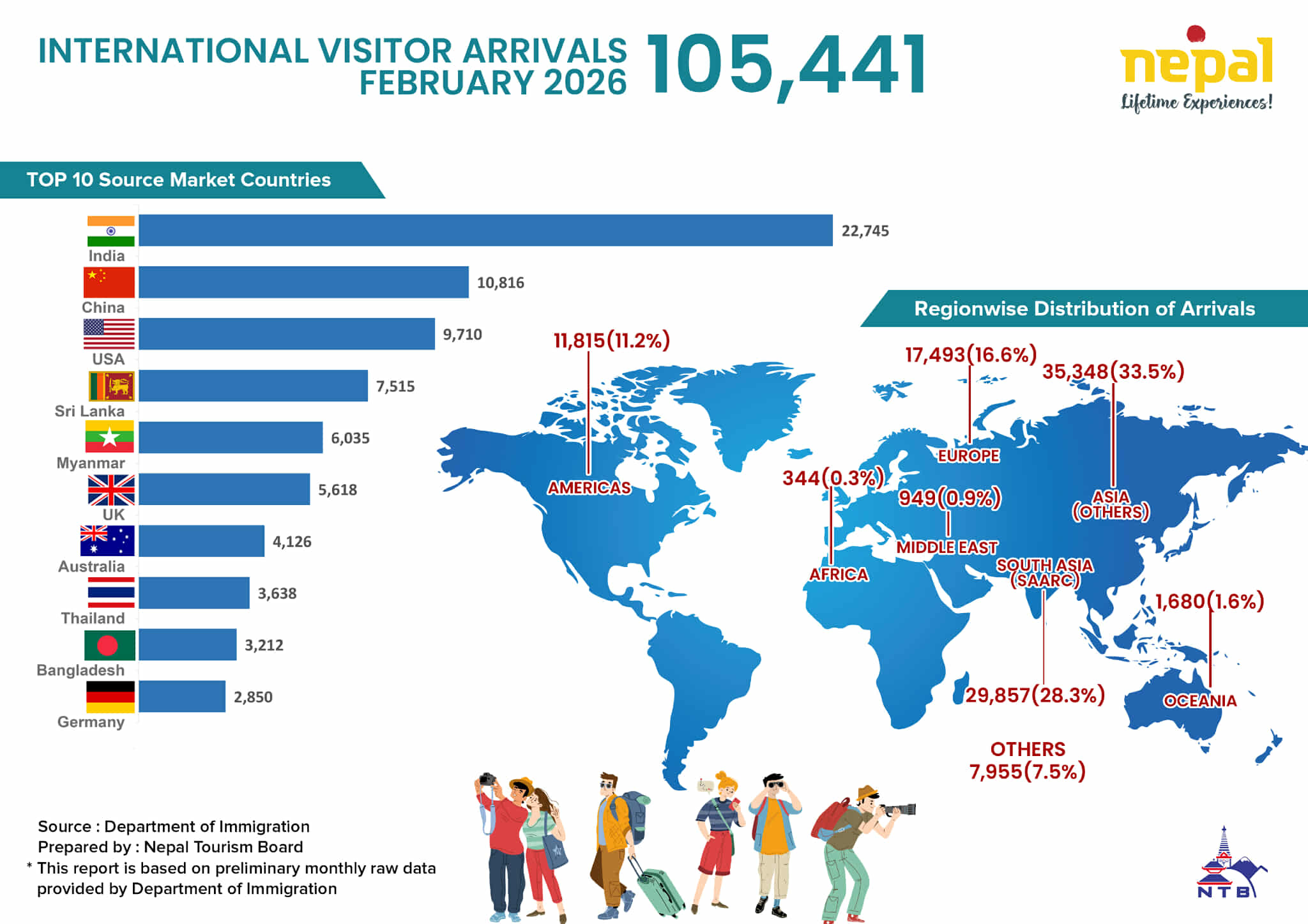
Nepal’s tourism sector continued its upward trajectory in February 2026, recording a total of 105,441 International Visitor Arrivals (IVAs) during the month. The latest figures highlight an 8.8 percent increase compared to February 2025 and a 2.9 percent rise over pre-pandemic levels of February 2019. Overall, the country has achieved a 102.9 percent recovery compared to 2019, signaling a full rebound and renewed global confidence in Nepal as a leading travel destination.
According to data released by the Nepal Tourism Board, the steady growth reflects sustained international interest in Nepal’s diverse tourism offerings, including adventure travel, cultural heritage, spiritual tourism, and nature-based experiences.
India Leads Top Source Markets
India remained the largest source market for Nepal in February, contributing 22,745 visitors, accounting for 21.6 percent of total arrivals. China secured the second position with 10,816 visitors (10.3 percent), followed by the United States with 9,710 arrivals (9.2 percent). Sri Lanka ranked fourth with 7,515 visitors (7.1 percent), while Myanmar completed the top five with 6,035 tourists, representing 5.7 percent of the total arrivals.
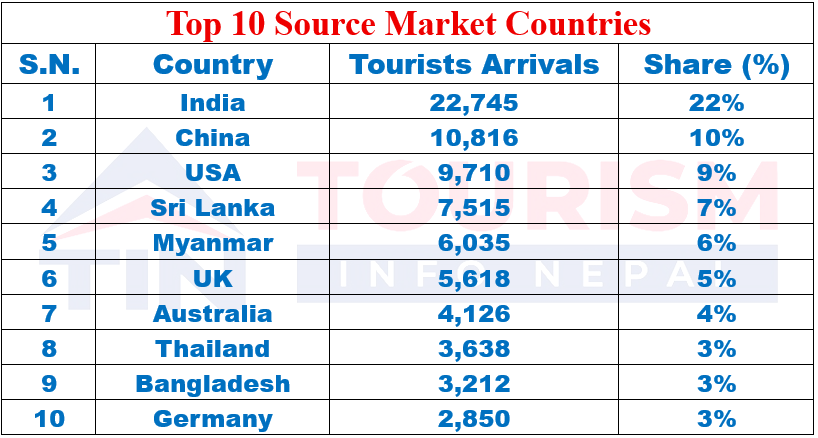
The strong presence of regional markets, particularly from South Asia and Asia, indicates Nepal’s growing accessibility and appeal within short- and medium-haul travel segments.
Region-wise Distribution Highlights Broad-Based Recovery
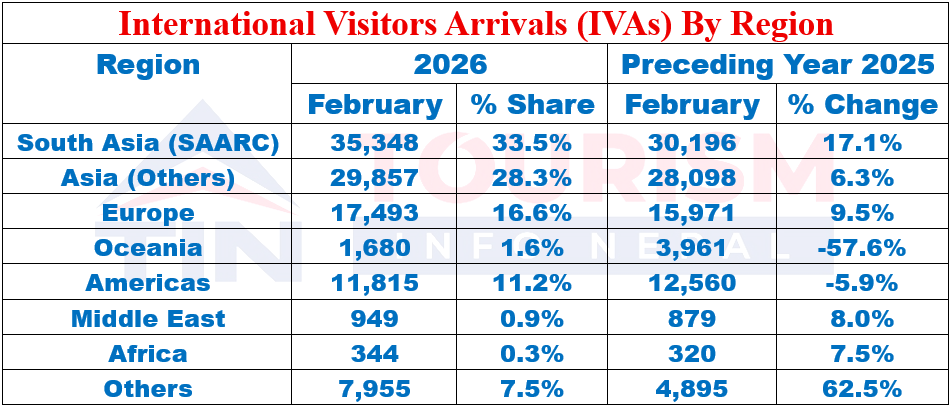
From a regional perspective, South Asia (SAARC countries) contributed the highest share at 33.5 percent of total arrivals. Other Asian countries accounted for 28.3 percent, underscoring Asia’s continued dominance as Nepal’s primary tourism source region. Europe followed with 16.6 percent, while the Americas contributed 11.2 percent. Smaller yet notable shares came from Oceania (1.6 percent), the Middle East (0.9 percent), and Africa (0.3 percent). The remaining 7.5 percent comprised visitors from other regions.
Tourism experts attribute the sustained growth to several factors, including improved air connectivity, strategic marketing initiatives, enhanced travel facilitation, and diversified tourism products. The strong performance in February 2026 is a reflection of both demand recovery and effective destination management.
The NTB expects that continued promotional campaigns targeting key source markets, combined with investment in tourism infrastructure, will further boost arrivals in 2026. The agency also aims to maintain Nepal’s competitive edge by highlighting unique offerings such as Himalayan treks, cultural heritage sites, wildlife tourism, and eco-friendly experiences.
Strengthening Nepal’s Global Position
With February 2026 marking a significant milestone in recovery, the country is on track to achieve higher annual tourist arrivals than pre-pandemic levels. NTB’s focus on improving quality standards, safety measures, and traveler experience is expected to attract more international visitors throughout the year.
As Nepal positions itself as a “Lifetime Experience Destination,” the tourism sector’s revival supports broader economic objectives, including employment generation, foreign exchange earnings, and sustainable community development.
With a solid foundation built on robust regional inflows and returning long-haul travelers, Nepal’s tourism industry is expected to maintain an upward trajectory, contributing significantly to the nation’s economic resilience and global tourism profile.