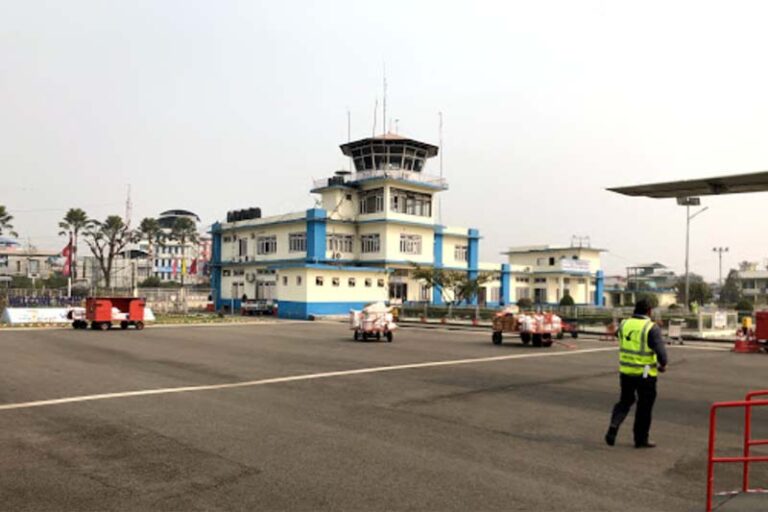
The European Union has officially expanded its aviation safety cooperation with Nepal, marking a significant transition toward a more integrated, long-term regional framework. The move represents a meaningful evolution in the relationship between the EU and Nepal on aviation matters, moving beyond sporadic technical engagement toward a more structured and sustained partnership designed to address the systemic challenges facing Nepal’s aviation sector.
Kathmandu Hosts Two Critical Regional Workshops
As part of this renewed commitment, Kathmandu is currently serving as the hub for two important aviation workshops bringing together regional and international expertise. The first, the Regional Aviation Safety Programme (RASP), is running from June 23 to 25, while the second, the South Asia Regional Initiative (SARI), is scheduled to take place from June 29 to July 2.

These sessions have been designed specifically to harmonise operational standards across the broader South Asian region, with particular focus on several essential technical areas: crew fatigue management, a critical safety concern given the demanding scheduling pressures often faced by aviation personnel; advanced pilot training, aimed at raising the overall skill and preparedness levels of the region’s flying workforce; and the adoption of modern oversight concepts aligned with European Union Aviation Safety Agency (EASA) regulations, ensuring that regulatory frameworks across participating countries move toward greater consistency with internationally recognised best practice.
Nepal’s Corrective Action Plan Reaches a Key Milestone
A particularly significant development within this broader diplomatic engagement is the EU’s formal acknowledgment of Nepal’s comprehensive Corrective Action Plan. Following the submission of what has been described as a “complete package,” officials from the EU’s Directorate-General for Mobility and Transport are expected to conduct a formal review of the plan in the near future.
This acknowledgment represents an important procedural milestone for Nepal’s aviation authorities, as it signals that the corrective measures Nepal has proposed are now considered sufficiently comprehensive to warrant formal EU evaluation. The development is being closely monitored by international stakeholders as a key step in strengthening Nepal’s domestic aeronautics systems, a goal that has remained a primary objective for those invested in the long-term safety and reliability of the country’s airspace.

Aviation Safety as a Foundation for Economic Growth
Central to the EU-Nepal partnership is a shared recognition that air safety functions as a non-negotiable prerequisite for broader economic development, particularly for sectors such as tourism and regional connectivity that depend heavily on a reliable and internationally trusted aviation sector. For a country like Nepal, where tourism represents a vital economic pillar and where much of the country’s most spectacular and remote terrain is accessible primarily by air, the link between aeronautics safety standards and broader economic opportunity is especially direct and consequential.
EU Welcomes Nepal’s Renewed Policy Focus
EU Chargé d’Affaires Thomas Millar highlighted that the European Commission has taken positive note of the Nepali government’s recent focus on aviation safety issues. He specifically cited the prominence given to air safety in the Finance Minister’s recent budget speech as an encouraging signal, suggesting that aviation safety reform is increasingly being treated not merely as a technical regulatory matter, but as a policy priority embedded within Nepal’s broader national economic planning.
This kind of high-level political attention to aviation safety is often viewed by international partners as an important indicator of genuine institutional commitment, distinguishing substantive reform efforts from more superficial compliance exercises.
From Intermittent Exchanges to Demand-Driven Collaboration
A defining feature of this renewed partnership is its shift in structural approach. Rather than relying on intermittent technical exchanges, ad hoc engagements that have historically characterised much of the EU’s aviation safety cooperation with Nepal, both parties are now moving toward a demand-driven collaborative model. Under this approach, cooperation is structured around Nepal’s specific identified needs and ongoing reform priorities, with the goal of fostering a safer, more resilient aviation environment that genuinely meets the rigorous demands of global safety standards, rather than simply satisfying minimum compliance benchmarks.

What This Means for Nepal’s Aviation Future
The expanded cooperation framework, anchored by the Kathmandu workshops and the formal review of Nepal’s Corrective Action Plan, represents a potentially pivotal moment in Nepal’s long-running efforts to strengthen its aviation safety credentials on the international stage. Nepal’s aviation sector has faced periods of international scrutiny in the past, and the current EU engagement offers a structured pathway toward addressing the underlying systemic issues that have historically attracted such attention.
Should the ongoing review process and continued bilateral cooperation yield tangible improvements in regulatory oversight, pilot training standards, and operational safety practices, the long-term benefits could extend well beyond aviation safety metrics alone, potentially supporting Nepal’s broader tourism competitiveness and reinforcing international confidence in the reliability of the country’s air transport infrastructure.