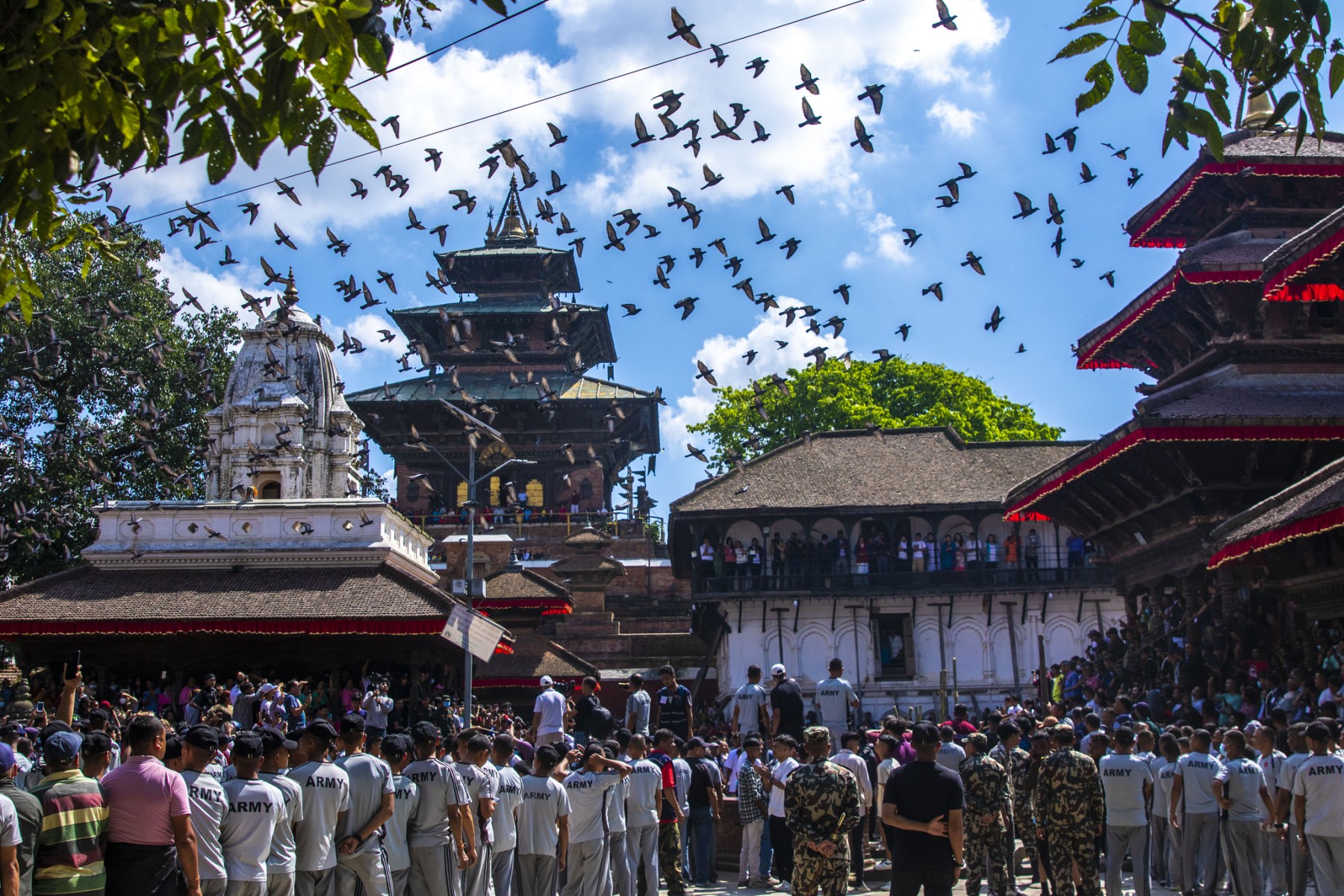
The Indrajatra lingo, a tall ritualistic wooden pole central to the centuries-old Indra Jatra celebrations, has been formally erected in front of the revered statue of Kaal Bhairav at Hanuman Dhoka Durbar Square, a UNESCO World Heritage Site. The auspicious installation took place at 10:31 am today, following the time prescribed by the Nepal Calendar Determination Development Committee.
According to Laxuna Sharma, Head of the Guthi Trust’s Kathmandu branch office, the event was carried out with full adherence to traditional and tantric customs, marking the official commencement of the week-long Indra Jatra festivities in Kathmandu Valley.
Rituals Follow Ancient Traditions
The installation of the Indrajatra lingo is steeped in history and symbolism. The wooden pole, also known as Indradhwoj, represents an invitation to the Hindu deity Indra, the god of rain and king of heaven, to descend to earth and bless the people with prosperity and good harvest.
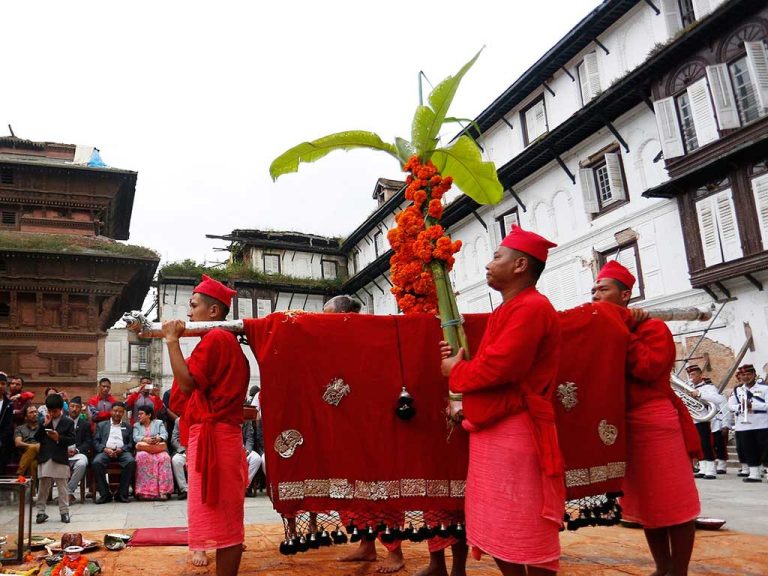
Earlier, on August 31, the lingo was ceremoniously transported to the city. As per tradition, the pole was brought from Bhotahiti and placed in front of the Kaal Bhairav statue at Basantapur Durbar Square on Bhadra Shukla Ashtami. This marked the preliminary stage of preparations for the grand festival.
On Bhadra Shukla Dwitiya night, a pine tree was cut from Chittapal Community Forest in Bhaktapur, which was then brought to Bhotahiti the following day. This wooden pole underwent special purifying rituals before being prepared for today’s erection.
Tantric Rites and Community Participation
The Indrajatra lingo was raised using bamboo supports and strong ropes, with coordinated teamwork under the guidance of experienced cultural experts. The process, led by Rajendra Dahal, Chief of the Religious and Cultural Branch of the Guthi Trust, incorporated tantric rituals to ensure the sanctity and spiritual significance of the event.
Local residents, cultural enthusiasts, and tourists gathered in large numbers to witness the spectacle. The atmosphere at Hanuman Dhoka was filled with the beats of traditional dhime drums, nagara, and other folk instruments, creating a vibrant and festive environment.
Upcoming Highlights of Indra Jatra
With the erection of the lingo on Bhadra Shukla Dwadashi, the stage is set for the highlight of the festival, the grand procession on Bhadra Shukla Chaturdashi, also known as Ananta Chaturdashi. On this main day of Indra Jatra, Shree Kumari (the Living Goddess), Shri Ganesh, and Shri Bhairav will be taken out in a ceremonial chariot procession through the historic streets of Kathmandu. The event will be attended by dignitaries, including President Ramchandra Paudel, senior government officials, and foreign diplomats.
The procession is known for its blend of religious devotion, royal traditions, and vibrant cultural displays. Masked dancers representing deities and mythical figures, traditional music, and the offering of Samay Baji (a ceremonial Newar feast) to onlookers are key features of the celebration.
Cultural Significance of Indra Jatra
Indra Jatra is one of the oldest and most important cultural festivals of the Kathmandu Valley, celebrated primarily by the Newar community. The festival has dual importance, religious and socio-cultural. It honors Indra, seeking his blessings for rainfall and fertility, while also paying homage to deceased family members through the practice of Yenya Punhi (festival of Kathmandu).
The lingo, with its fluttering white banner, is a symbolic beacon that connects heaven and earth. Its presence in Hanuman Dhoka for the duration of the festival signifies the divine arrival and blessings of Indra.
Public Holiday and Tourism Attraction
In keeping with tradition, a public holiday is declared in Kathmandu Valley on the main day of Indra Jatra. Schools, offices, and marketplaces close early, allowing people to participate in or witness the celebrations.
The festival also serves as a major tourism attraction, drawing both domestic and international visitors. The combination of historic architecture, vibrant street processions, and unique cultural rituals offers photographers, researchers, and culture enthusiasts a rare glimpse into Nepal’s living heritage.
Tour operators, heritage guides, and local vendors benefit significantly from the influx of visitors, making Indra Jatra not just a religious occasion but also an important economic and cultural event for Kathmandu.
Preservation of a Timeless Tradition
Despite modernization and urban challenges, the rituals surrounding the erection of the Indrajatra lingo have remained largely unchanged for centuries. The involvement of the Guthi Trust, local communities, and cultural organizations ensures the preservation of this heritage.
For many residents of Kathmandu, the sight of the lingo standing tall in Hanuman Dhoka is more than a festive decoration, it is a symbol of continuity, faith, and unity among generations. As the celebrations unfold in the coming days, the Indra Jatra festival will once again reaffirm Kathmandu’s rich legacy as a city of gods, legends, and timeless traditions.