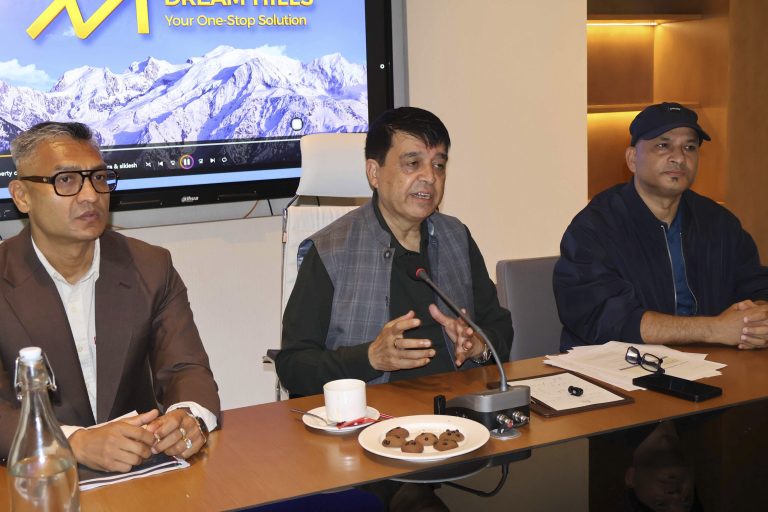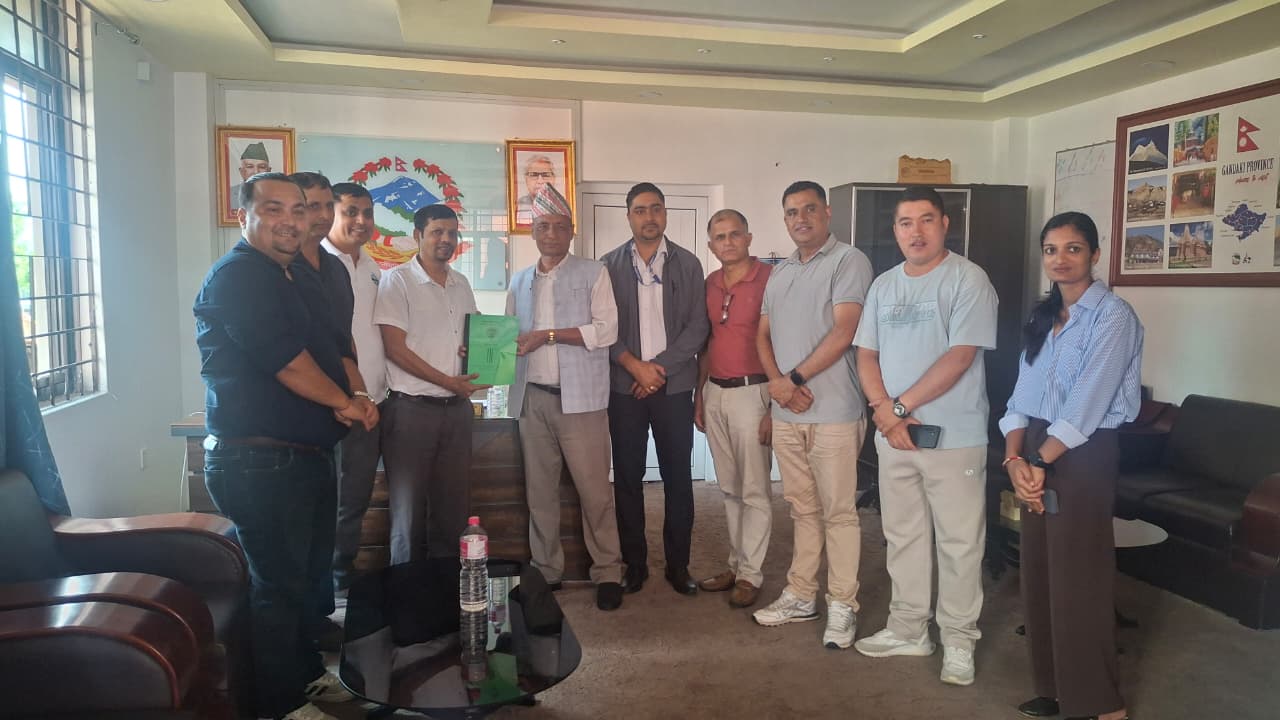
The Pokhara Tourism Council (PTC) has submitted a preliminary report to the Gandaki Province Minister for Tourism, Mitralal Basyal, outlining the extensive losses suffered by Pokhara’s tourism sector during the recent Gen-Z movement. The report, prepared under the leadership of PTC President Taranath Pahari, was presented by a delegation comprising representatives from various tourism-related associations.
Preliminary Assessment Reveals Heavy Losses
According to the preliminary damage report, a total of 10 hotels and business establishments in Pokhara have suffered significant financial losses due to the disruptions caused by the movement. The report highlights damages amounting to billions of rupees, affecting major hospitality and tourism service providers across the city.

As per the council’s findings, Hotel Sarobar incurred the highest estimated damage of Rs. 1 billion, followed by Bagaincha Resort with Rs. 400 million, and Hotel Goodwill with Rs. 200 million in losses. Similarly, Pokhara Event Center faced an estimated loss of Rs. 195 million, while shops and businesses within Anshubhura Complex sustained damages worth around Rs. 80 million.
Other establishments, including Bar Pipal Resort (Rs. 30 million) and Hotel Adam Pvt. Ltd. (Rs. 10 million), also reported significant losses. Meanwhile, Hotel Landmark recorded damages of Rs. 2.5 million, Baidam Community Service Center suffered losses of Rs. 1.2 million, and Mantra Thakali Restaurant incurred losses of Rs. 500,000.
Additional Losses to Tourists and Institutions
Beyond physical infrastructure, the report also notes that several offices, banks, and tourism-related institutions located within these damaged premises have faced property and equipment losses. Furthermore, many domestic and foreign tourists reportedly lost personal belongings during the unrest, adding to the overall economic and reputational toll on Pokhara’s tourism industry.
The Council emphasized that the damages extend beyond immediate financial costs, affecting investor confidence, employment stability, and the broader tourism ecosystem that supports thousands of livelihoods in the city.
Tourism Sector Faces Dual Challenges
The report expresses deep concern over the timing of the movement, coinciding with the beginning of the peak tourist season, traditionally one of Pokhara’s most active economic periods. The Council warned that the ongoing political activities, including the upcoming provincial election scheduled for Falgun 21, could further disrupt tourism and delay recovery efforts.
“The protest and political uncertainties have created serious repercussions for the tourism sector,” the report states. “If immediate support and recovery measures are not implemented, the impact will continue into the next tourist season, discouraging both domestic and international visitors.”
Call for Business Survival Loan Scheme
Recalling the government’s previous intervention during the COVID-19 pandemic, the Pokhara Tourism Council urged the Gandaki Province Government to reintroduce a similar “Business Survival Loan” program to assist affected entrepreneurs.
“In the past, when the tourism sector was devastated by COVID-19, the provincial government had provided interest-free loans of up to Rs. 1.5 million to support struggling businesses,” the report mentioned. “Given the current situation, we sincerely request the government to immediately implement a similar loan scheme to protect and revive tourism enterprises.” The Council further appealed for a special relief package targeting hotels, travel agencies, and local service providers directly impacted by the unrest.
Appeal for Immediate and Long-Term Solutions
The report urges the Gandaki Province Government and other relevant authorities to take immediate action to address the crisis and to work toward long-term solutions for the tourism industry. It recommends that appropriate compensation be provided to affected business owners and that the government initiate a coordinated response involving both public and private stakeholders.
“The provincial government and concerned agencies must demonstrate urgency,” the report emphasized, “by implementing recovery programs that not only compensate affected businesses but also rebuild confidence in Pokhara as a safe and reliable tourism destination.”
Industry Representatives Urge Budget Reallocation
During the meeting, tourism entrepreneurs also suggested reallocating existing tourism budgets to prioritize promotion and recovery rather than infrastructure. They argued that redirecting funds from fragmented or less impactful projects could yield better outcomes for the sector’s revival.
“Instead of scattering resources across small-scale projects, the government should channel its budget toward tourism promotion and sustainable recovery,” said Jeevan Sapkota, General Secretary of the Pokhara Tourism Council.
The entrepreneurs further urged the ministry to focus on international marketing campaigns, destination branding, and partnership programs with the private sector to restore Pokhara’s image and attract tourists.

A Critical Time for Pokhara’s Tourism
Pokhara, Nepal’s premier tourist city, relies heavily on the hospitality industry for employment and revenue generation. The recent unrest, coming at a time when the tourism sector was showing signs of post-pandemic recovery, has once again placed business owners in financial distress.
The Council’s report concludes with a strong appeal for government intervention, warning that without timely assistance, many businesses may struggle to sustain operations. It stresses the need for a unified response from all stakeholders to ensure the city’s tourism resilience and long-term sustainability.