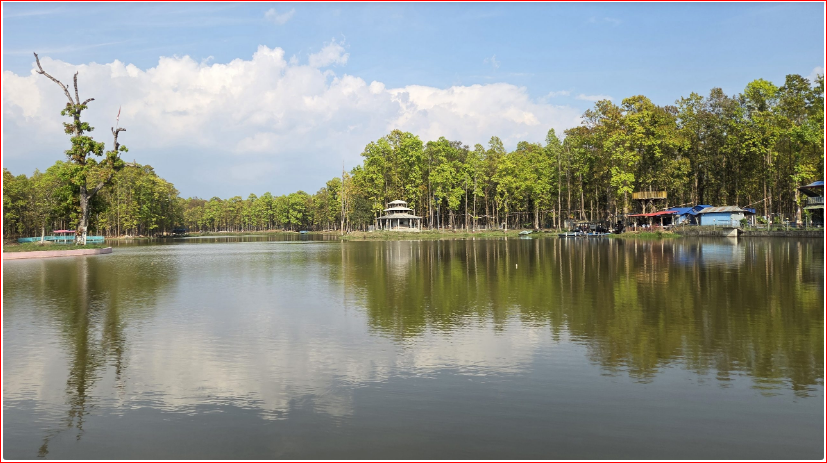
Among the dozens of lakes and wetlands in Sunsari district, Rasa Lake, located in Ramdhuni Municipality–7, is rapidly becoming a major attraction for both domestic and international tourists. Surrounded by wide open spaces and encircled by dense four-cornered shrubs, this tranquil lake draws a steady stream of visitors daily, captivated by its natural beauty and serene environment.
Unique Attractions and Fishing Opportunities
Unlike other lakes in the region, Rasa Lake offers scenic views combined with all-day fishing facilities, which is a major draw for tourists. Daily visitors come not only from nearby cities like Dharan, Itahari, Biratnagar, Dhankuta, and Birgunj, but also from various parts of India.

The lake area has been developed to accommodate up to 145 groups simultaneously, making it especially suitable for picnics and social gatherings. During peak season, visitor numbers range from 8,000 to 10,000 per day, while in the off-season, around 200–300 tourists visit daily, according to Bhim Bahadur Majhi, Secretary of the Rasa Lake Management Committee. The majority of visitors arrive during the months of Mangsir, Poush, and Baisakh–Jestha in the Nepali calendar.
Development as a Tourist Model Site
Rasa Lake spans approximately 8 hectares within a 61-hectare community forest area. Since 2071 BS, the lake has been developed as a model tourist area under local initiatives, linked to the national figure Iman Singh Chemjong. Under the Koshi Province Tourism Ministry’s 2077/78 budget, an allocation of Rs 8 million was used for the construction of a view tower, a statue of Iman Singh Chemjong, and the fencing of 29 hectares of the surrounding area. The site also includes a cultural showcase representing over 100 ethnic groups, a model monastery, and a museum to promote local culture and heritage.
Fishing and Boating Facilities
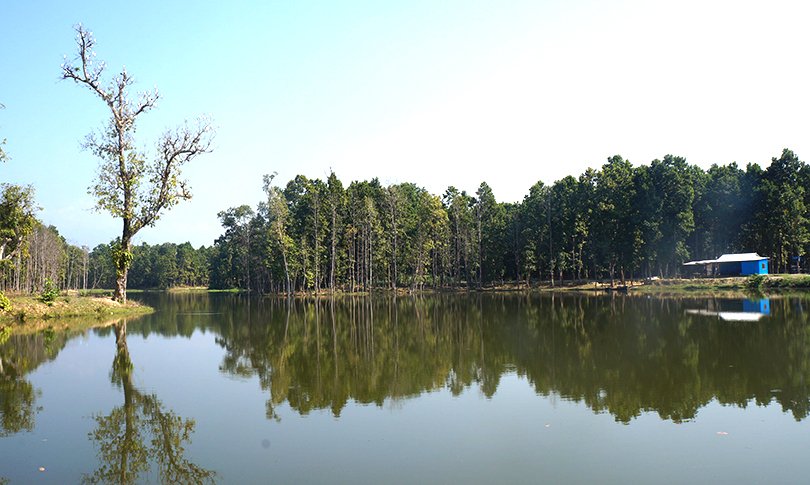
Tourists can enjoy fishing by paying a nominal fee of Rs 300, available from 6:00 AM to 6:00 PM. Visitors are allowed to keep the fish they catch, with some catching up to 10 kilograms in a day. The lake is home to seven species of fish, including Kamalakar, Grass, Rahu, and Nauni.
In addition to fishing, tourists can enjoy boating, while the on-site mini zoo allows visitors to observe animals such as rabbits, owls, eagles, monkeys, and crocodiles. A small island in the middle of the lake, built for Rs 1.5 million, can be accessed via three wooden bridges, enhancing the lake’s appeal.
To further improve the area’s environmental beauty, rare trees like Sal and Siris have been planted, and the construction of a main entrance and a tree house, costing approximately Rs 2.5 million, provides panoramic views of the entire lake.

Economic Impact and Community Benefits
The management committee reports that annual revenue from picnics and boating ranges from Rs 6 to 7 lakh, which is reinvested in lake conservation and infrastructure development. Local businesses, including snack stalls and eateries, have also flourished due to the growing tourist influx.
Despite these improvements, some infrastructure projects remain incomplete due to budget constraints, and local authorities emphasize the need for further investment from provincial and local governments. The committee believes that Rasa Lake, established as a key tourist destination, has significant potential to contribute to the economic prosperity of the region and continues to prioritize its conservation and sustainable development.