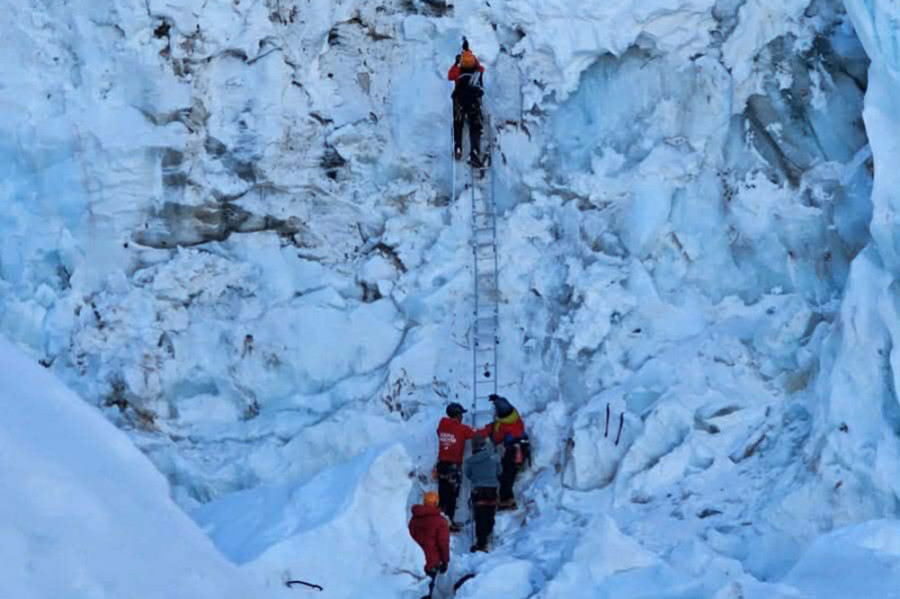
Efforts to locate missing mountain guide Dawa Sherpa have intensified as expedition operator 8K Expeditions has launched aerial search operations in the Everest region. Rescue teams are continuing the search under extremely challenging end-of-season conditions in the high Himalayas.
According to expedition officials, the search operation faces major logistical and safety difficulties because the Khumbu Icefall route was scheduled to be dismantled on the same day Dawa Sherpa went missing. The dismantling of ropes, ladders, and climbing infrastructure has made ground-based rescue missions highly dangerous and difficult for search teams.

Mountaineering Community Raises Concerns
The incident has sparked growing frustration and concern within the international mountaineering community regarding delays in initiating rescue efforts. Reports indicate that the smaller expedition agency directly handling Dawa Sherpa’s assignment had reportedly become aware of his condition on May 29.
However, the information was allegedly not immediately communicated to larger rescue networks, and insurance-related procedures were not promptly cleared. As a result, rescue coordination reportedly faced delays during the critical early stages of the incident.
8K Expeditions Mobilized After Media Reports
According to sources within the expedition sector, 8K Expeditions only learned about Dawa Sherpa’s disappearance several days later through media channels before mobilizing aerial resources and support teams. The situation has triggered criticism regarding communication gaps within Nepal’s mountaineering rescue system, especially during high-risk rescue situations involving local guides and support staff. Industry stakeholders have stressed the need for faster coordination mechanisms among expedition agencies, rescue operators, insurance providers, and government authorities.
Questions Raised Over Official Monitoring System
The incident has also drawn attention to the effectiveness of official monitoring and information-sharing systems during the spring climbing season. This season, the government reportedly deployed around 60 liaison officers to monitor climbing activities on Nepal’s mountains.
However, several expedition officials have publicly criticized what they describe as a lack of timely information, tracking, and emergency coordination from regulatory channels. Mountaineering operators argue that delayed communication can significantly reduce the chances of successful rescue operations in extreme Himalayan environments, where weather conditions and terrain rapidly deteriorate.
Challenges Faced by Smaller Expedition Operators
The case has highlighted broader systemic issues within Nepal’s mountaineering industry, particularly regarding rescue financing and emergency preparedness among smaller operators. Industry insiders say smaller expedition companies often lack the financial resources and insurance backing necessary to immediately launch large-scale rescue missions.
In many cases, independent aerial rescues and emergency operations require significant upfront funding and rapid logistical mobilization. The incident has reignited debate over whether current rescue systems provide equal urgency and support for local mountain workers compared to high-paying foreign climbers.
Risks Faced by Local Mountain Guides
Nepali guides and Sherpas continue to play a crucial role in Himalayan expeditions, often carrying heavy loads, fixing climbing routes, and supporting international climbers under extremely hazardous conditions. Despite their contribution, mountaineering advocates say local guides frequently face greater risks while receiving less institutional protection and slower emergency response support. The ongoing search for Dawa Sherpa has once again drawn attention to the physical dangers and operational challenges faced by Himalayan workers during every climbing season.

Search Teams Continue Efforts
Search and rescue teams continue operations despite difficult weather, technical terrain, and deteriorating seasonal conditions in the Khumbu region. Officials say efforts remain focused on locating Dawa Sherpa as quickly as possible. The incident has prompted renewed calls for stronger rescue coordination systems, improved communication protocols, and faster insurance clearance mechanisms within Nepal’s mountaineering sector.
As the search operation continues, concern and solidarity are growing across the climbing community for Dawa Sherpa, his family, and the rescue personnel risking their lives in dangerous mountain conditions. The tragedy has also exposed critical gaps in rescue preparedness, communication, and emergency response systems, leading to increased pressure on authorities and expedition operators to strengthen safety and accountability standards in Nepal’s mountaineering industry.