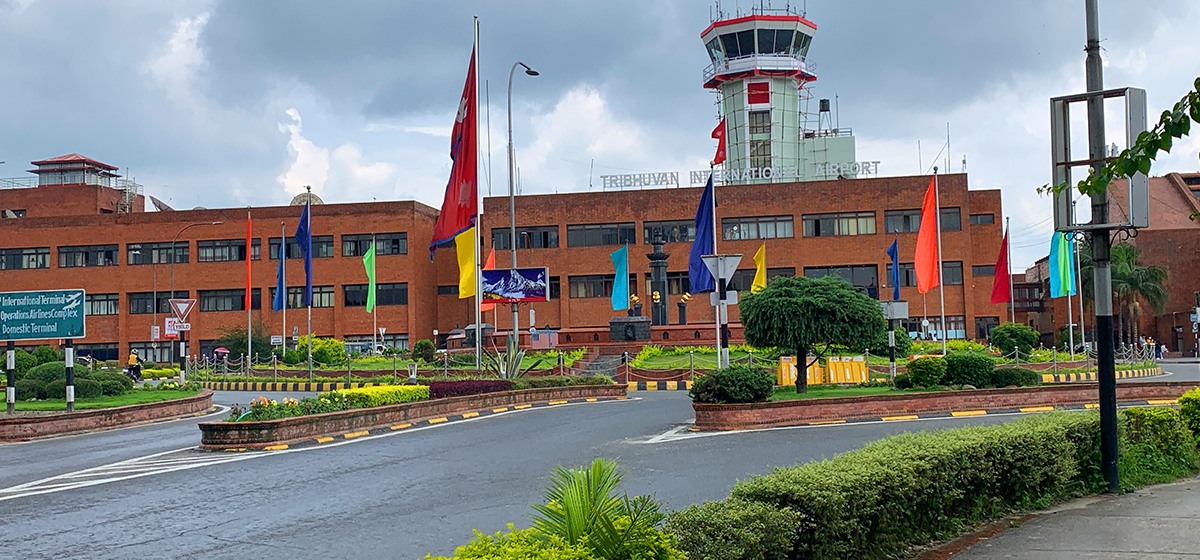
Tribhuvan International Airport (TIA) witnessed an unprecedented surge in air traffic on Monday, with 559 flights operating, serving a total of 35,704 passengers. This marks the highest number of flights and passengers recorded at the airport to date, according to airport authorities.
On Thursday, Ashwin 15, the airport managed 511 flights, including helicopter services. On Wednesday, there were 473 flights recorded, with a notable increase in both domestic and international air travel. While there was a slight reduction in flight numbers on Thursday and Friday, the airport has had to accommodate an additional 100 to 150 flights beyond the usual daily average of around 400.
The spike in air traffic is largely attributed to the continuous rainfall and subsequent landslides on Ashwin 11 and 12, which disrupted road travel across various regions of the country. As a result, air travel has become a preferred alternative for stranded passengers. The increase in flights has led to congestion at the airport terminals, creating challenges for airlines in managing their schedules.
The rise in air traffic has also raised concerns regarding air traffic management and flight safety. Authorities and airline officials assure that safety protocols remain stringent despite the increased demand. Pradeep Adhikari, Director General of the Civil Aviation Authority of Nepal (CAAN), emphasized that there is zero tolerance for compromising safety. He stated, “All personnel, including air traffic controllers, technical staff, and security personnel, are working tirelessly to ensure the safety and efficiency of operations.”
Manoj Karki, President of the Airlines Operators Association, echoed similar sentiments, highlighting that all airlines are operating at full capacity without compromising safety standards.
The recent adverse weather has not only increased air traffic but has also intensified competition among airlines. Experts warn that this heightened competition, combined with pricing pressure, could potentially elevate risks, urging regulatory bodies to maintain effective oversight of air safety measures.
Airport spokesperson Rinji Sherpa noted that the increase in flight operations has led to higher air traffic congestion, resulting in delays and holding patterns for arriving flights. Regulatory authorities are working to balance the demand for flights with the airport’s capacity.
To address the growing demand for air travel during this peak season, particularly ahead of major festivals like Dashain, the government has announced the operation of night flights from today until the full moon day. This initiative aims to alleviate congestion and provide additional travel options for passengers.
As airlines expand their operations in response to the surge in demand, Buddha Air has added two flights each to Bhadrpur and Bharatpur. Similarly, Shree Airlines has begun flights on the Kathmandu-Bharatpur route, while Yeti Airlines has introduced additional flights to Bhadrpur, Nepalgunj, and Janakpur.
Passengers have reported difficulties in securing tickets, even with the increased flight options, as many routes remain fully booked. The airport authorities and airlines continue to manage the situation as they strive to meet the travel needs of the public.
Source: RSS