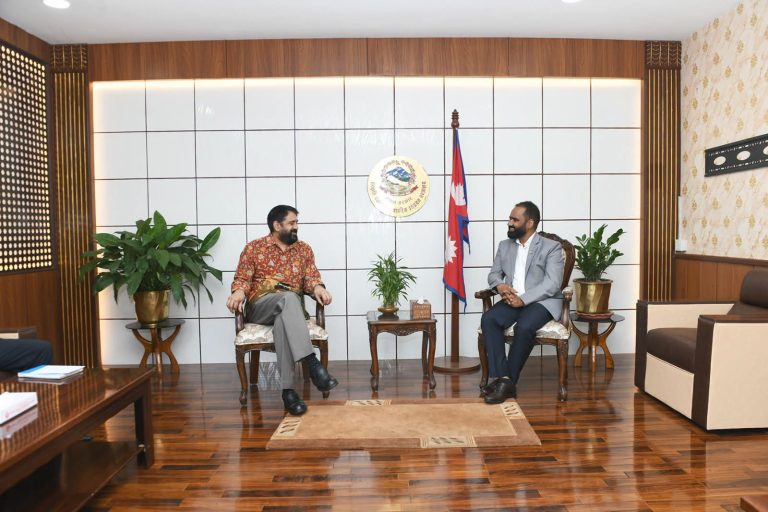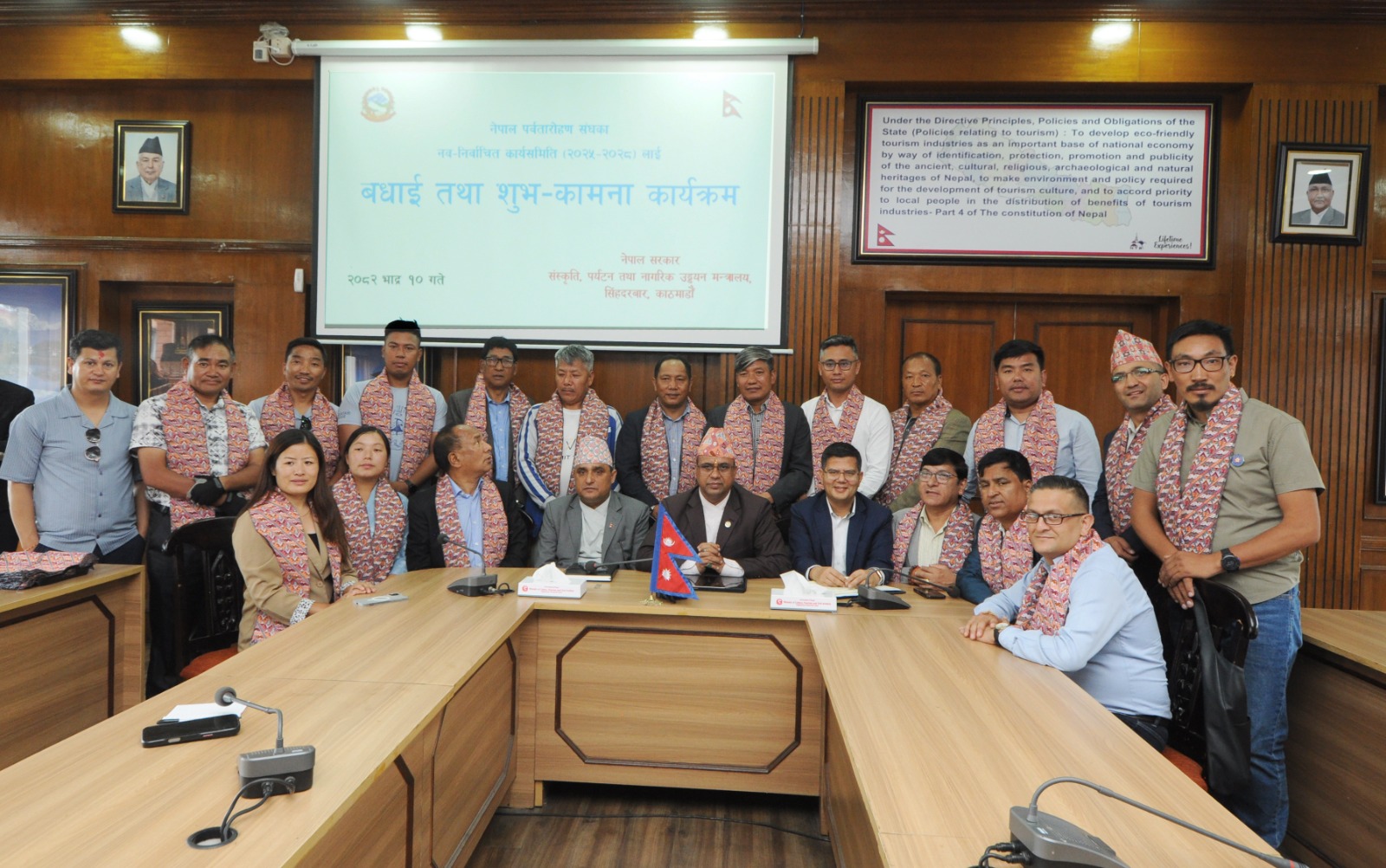
Minister for Culture, Tourism, and Civil Aviation, Badri Prasad Pandey, has stressed that Nepal Mountaineering Association (NMA) is indispensable for the future of mountaineering in the country. Addressing the newly elected executive committee led by President Phurba Gyalge Sherpa, the minister congratulated the team and underscored that without the NMA, the possibility of mountaineering in Nepal would not exist. He called for the association’s creative collaboration to sustainably advance the sector, ensuring that Nepal retains its global reputation as a premier mountaineering destination.
Endorsement of Leadership Term Limits and Project Completion
Minister Pandey commended the NMA’s provision of allowing leadership to serve only one term, describing it as a positive step toward organizational growth and inclusivity. He urged the new committee to focus on completing unfinished projects and to work more effectively in areas directly linked to mountaineering. Stressing the importance of continuity in initiatives, he called for a strategic approach to achieving long-term goals while addressing immediate challenges faced by climbers, operators, and local communities.
Upgrading the Pokhara Mountaineering Museum
The minister also highlighted the significance of the Mountaineering Museum in Pokhara, calling it a unique attraction that not only showcases Nepal’s mountaineering heritage but also draws international interest. He emphasized the need to upgrade the museum with modern facilities, interactive displays, and digital archives to make it a global center of knowledge and inspiration for climbers, historians, and tourists alike.
Government Initiatives to Boost Climbing Opportunities
Outlining recent government measures, Minister Pandey revealed that royalty fees for climbing 97 mountains have been waived for a period of two years to encourage more expeditions. In addition, 57 new peaks have been opened for climbing, expanding opportunities for both domestic and international mountaineers. He also mentioned ongoing discussions to lift restrictions in certain prohibited areas, along with plans to develop an alternative route from Everest Base Camp to Camp 1. These measures, he noted, are aimed at enhancing accessibility while maintaining safety and environmental standards.
Mountaineering as a Major Economic and Cultural Asset
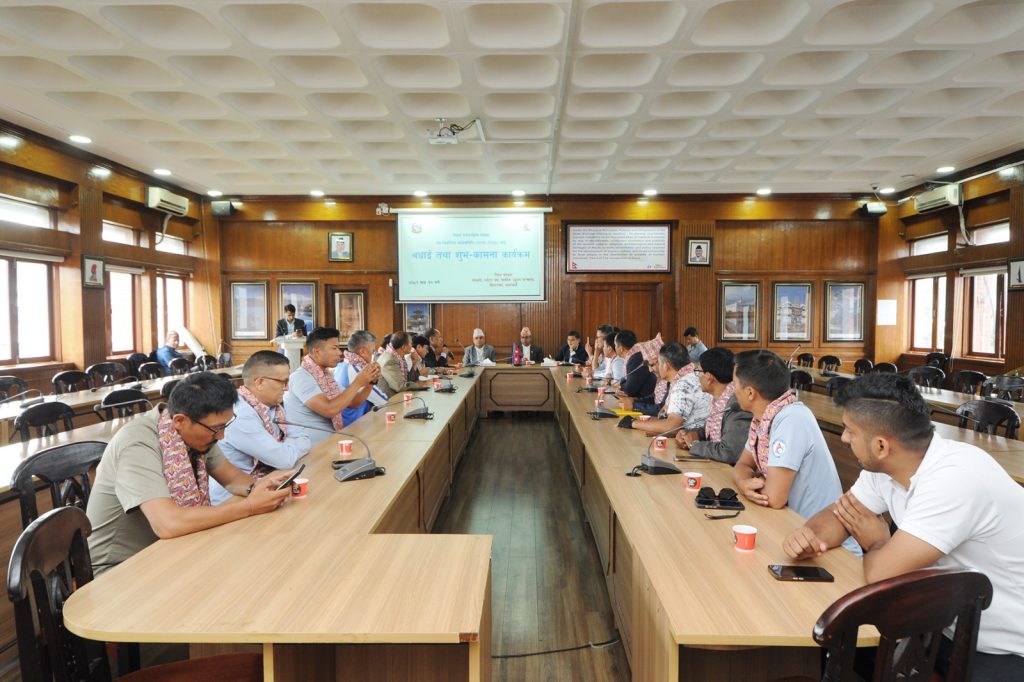
Minister Pandey reaffirmed that mountaineering is one of Nepal’s greatest assets, with immense potential to drive economic growth and promote cultural exchange. He stressed that while the adventure comes with inherent risks, efforts must focus on risk reduction, sustainable practices, and the preservation of the Himalayan ecosystem. The minister expressed confidence that policy reforms and legislative improvements in the tourism sector would create a more enabling environment for mountaineering activities.
Call for Creative and Effective Leadership
In his closing remarks, Minister Pandey wished the new NMA leadership success in providing creative and impactful guidance to the association. He emphasized that their role is pivotal not only in promoting mountaineering but also in protecting the livelihoods of local communities that depend on the tourism industry. “We expect you to work in partnership with the government to make Nepal’s mountaineering sector more resilient, innovative, and globally competitive,” he stated.
NMA President’s Commitment to Development
Newly elected NMA President Phurba Gyalge Sherpa assured that the executive committee is committed to enhancing tourism and promoting mountaineering in Nepal. He highlighted the need for more specialized training for climbers, guides, and support staff, arguing that skill development is key to improving safety and performance in high-altitude expeditions. Sherpa also urged the government to create more job opportunities in the mountaineering sector to curb the ongoing trend of youth migration for work abroad.
Focus on Training and Youth Engagement
President Sherpa emphasized that Nepal’s mountaineering industry could become a source of sustainable employment for thousands of young Nepalis if proper training, infrastructure, and promotional campaigns are implemented. He pledged to work closely with training institutes, tourism boards, and local communities to strengthen the capacity of the sector and ensure that climbing in Nepal remains safe, ethical, and environmentally responsible.
Book Presentation Honoring Mountaineering History
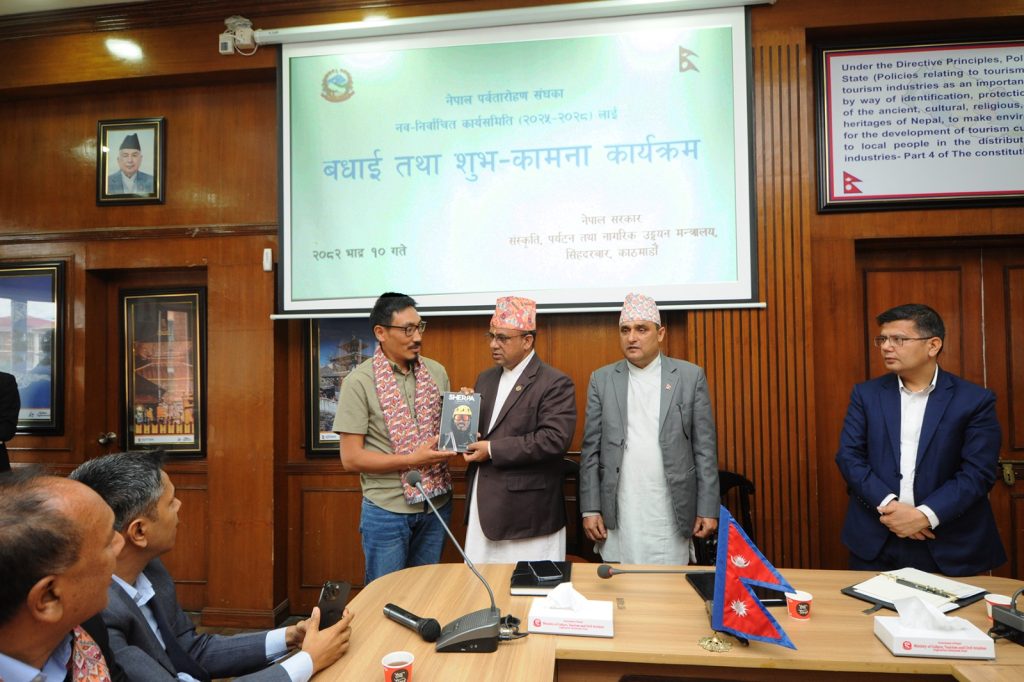
The event also featured the presentation of a book titled Sherpa, written by Dawa Tashi Sherpa. The book recounts the tragic 2014 avalanche on Mount Everest, in which 16 climbers lost their lives. The author, himself a survivor of the disaster, shared his firsthand account, offering a poignant reminder of the risks inherent in mountaineering and the resilience of the Sherpa community.
The book was handed over as a tribute to the courage, sacrifice, and enduring spirit of those who have shaped Nepal’s mountaineering history. Notably, 30% of every sale supports Himalayan communities through education and cultural preservation, meaning that when readers hold this book, they carry that mission with them.
Strengthening Government–NMA Collaboration
Both Minister Pandey and President Sherpa agreed that closer cooperation between the government and the NMA is vital to addressing challenges such as overcrowding on popular peaks, environmental degradation, and the need for better safety measures. By combining government policy reforms with the association’s field expertise, they believe Nepal can continue to attract climbers from around the globe while safeguarding the Himalayas for future generations.