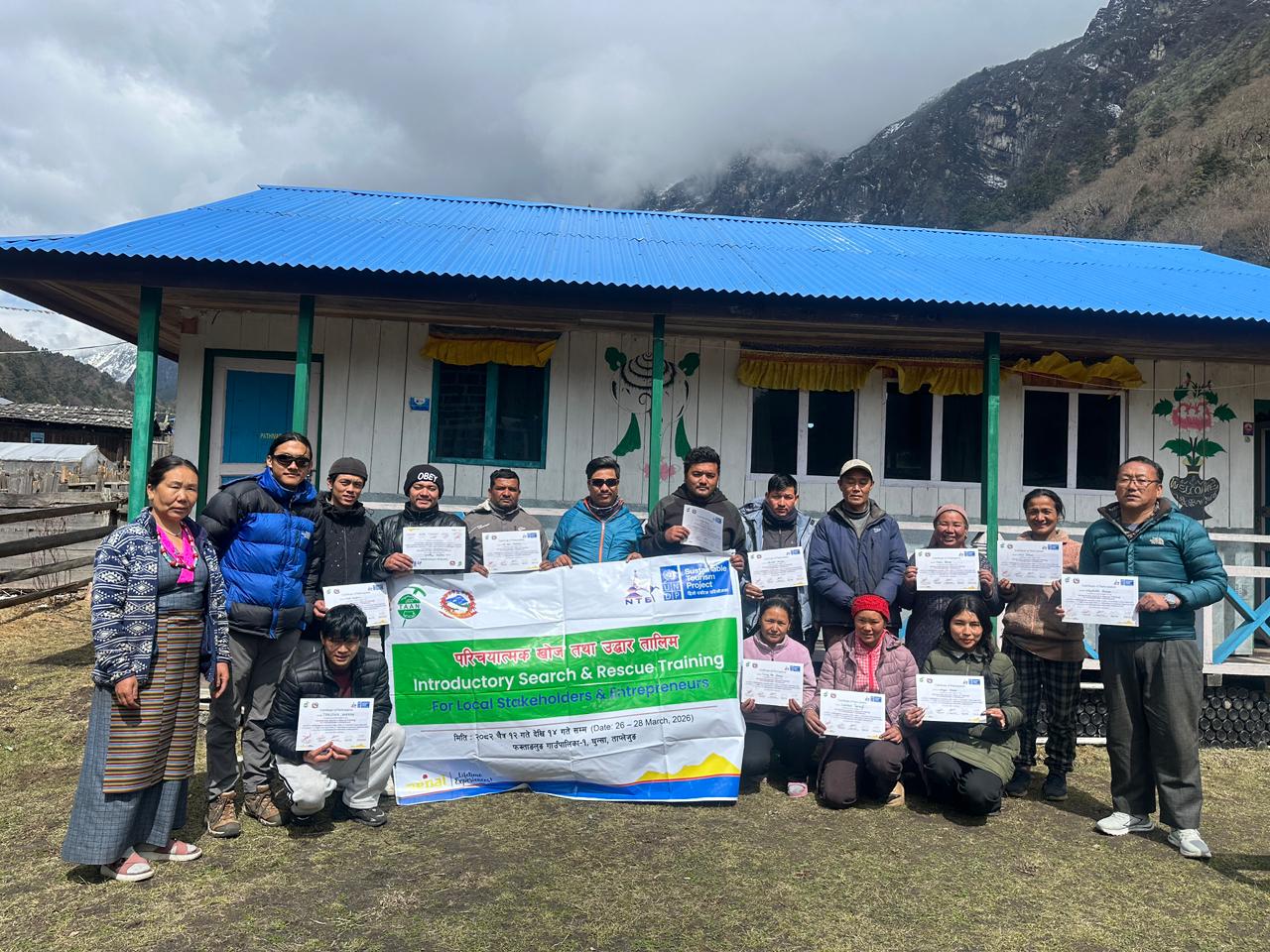
An Introductory Search and Rescue (SAR) Training has been completed in the Ghunsa area along the Kanchenjunga Base Camp Trail, marking a significant step toward enhancing safety and preparedness in one of Nepal’s most remote trekking regions.
Capacity Building in a Remote Himalayan Region
The four-day training, held from March 24 to 27, 2026, brought together more than 15 local stakeholders and tourism entrepreneurs from Ghunsa, Phale, and Gyabla in Phaktanglung Rural Municipality of Taplejung district. The initiative aimed to strengthen local capacity in handling emergencies and ensuring the safety of trekkers and tourism workers in the region.
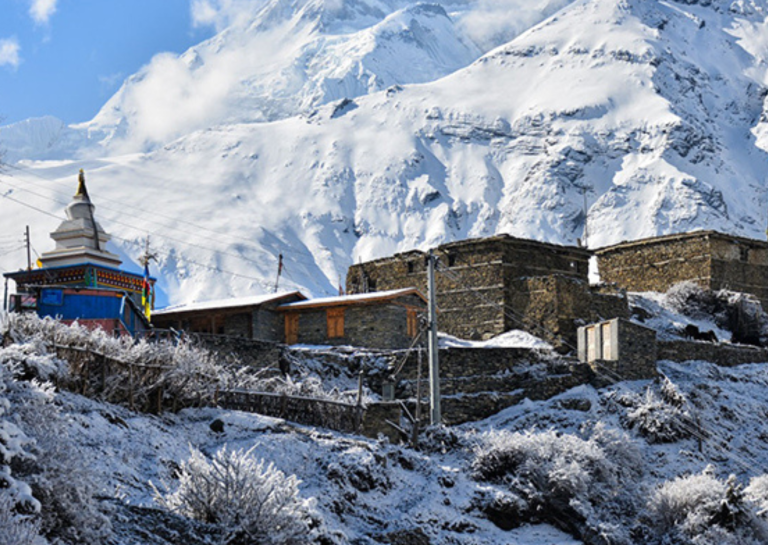
Ghunsa, a key settlement in eastern Nepal, serves as a major gateway to popular trekking routes including the Kanchenjunga Base Camp Trail, Yalungkhang Base Camp via Selele, and Walungchung Gola via the Nago La high pass. Given its strategic location and increasing trekking activity, the need for trained local responders has become increasingly important.
Joint Effort for Sustainable Tourism and Safety
The training was jointly organized by the Trekking Agencies’ Association of Nepal (TAAN) and the Sustainable Tourism Project (STP). The Sustainable Tourism Project (STP) is a collaborative initiative between the Nepal Tourism Board and the United Nations Development Programme (UNDP), aimed at promoting sustainable and resilient tourism practices across Nepal.
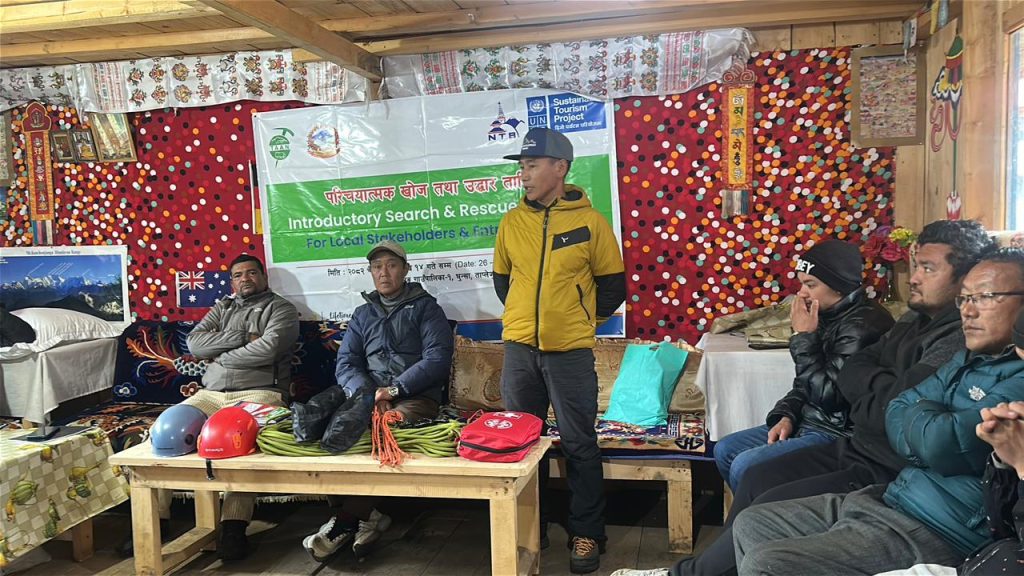
The program focused on equipping participants with essential skills in basic search and rescue operations, emergency response, and life-saving techniques. Organizers emphasized that improving local preparedness is critical to minimizing risks in high-altitude and remote trekking destinations like Kanchenjunga.
Diverse Participation from the Local Community
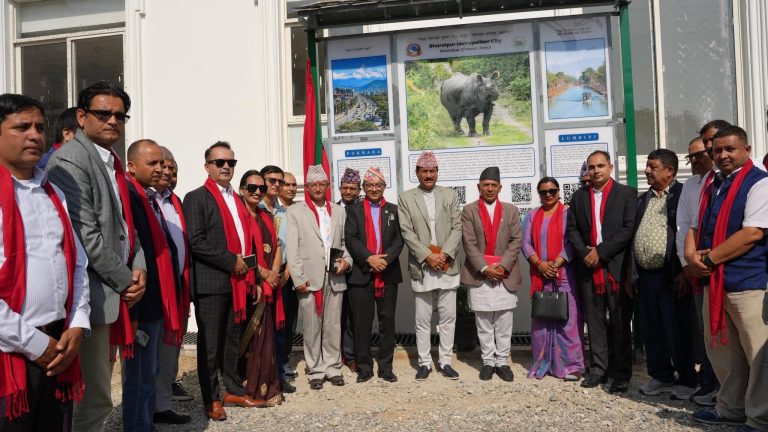
The training saw participation from a wide range of community representatives, reflecting a strong collaborative approach to tourism safety. Attendees included officials from the rural municipality, members of the Kanchenjunga Conservation Area Management Council (KCAMC), local police personnel, health post representatives, and members of the hotel and lodge committee.
In addition, tea-house lodge owners, local trekking guides, Mother Group members, yak herders, and non-timber forest product (NTFP) entrepreneurs also took part in the program. This diverse participation ensured that knowledge and skills were disseminated across different sectors directly involved in tourism and community life.
Local Coordination and Expert Facilitation
The training was locally coordinated by the Ward No. 1 Committee of Phaktanglung Rural Municipality, ensuring effective organization and community engagement. The sessions were facilitated by a team of qualified instructors led by experienced trainer Sanjib Gurung.
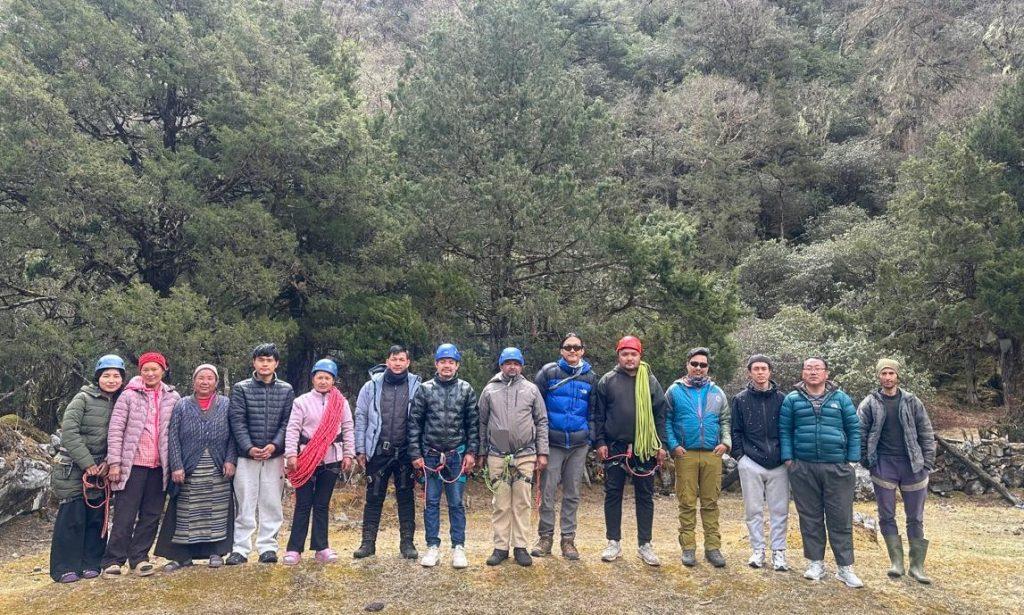
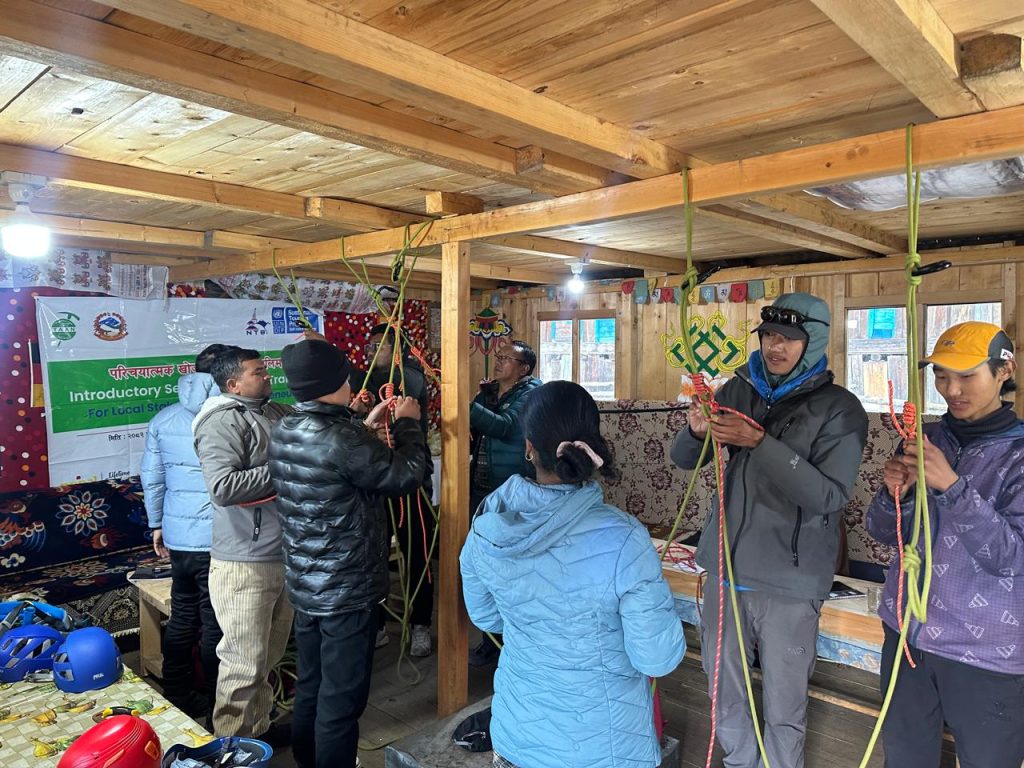
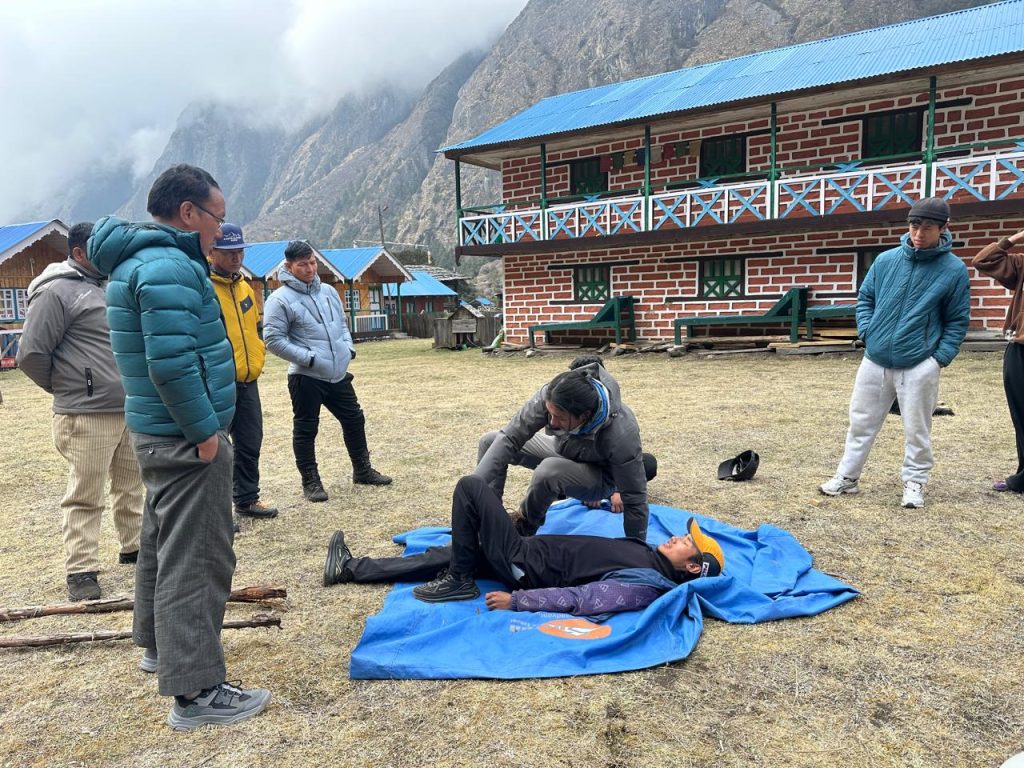
Participants were provided with both theoretical knowledge and practical demonstrations, covering areas such as emergency evacuation, use of rescue equipment, first aid response, and coordination during crises.
Equipment Support to Strengthen Local Readiness
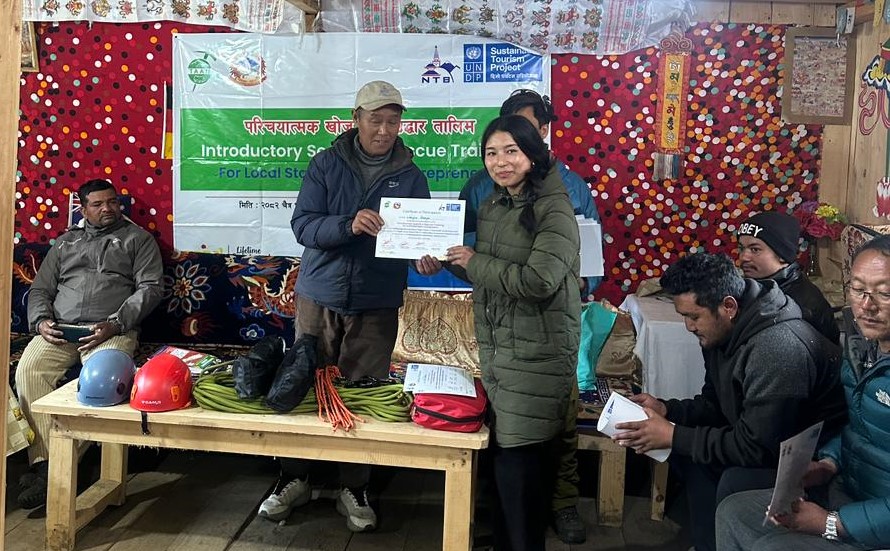
At the conclusion of the training, the Ward No. 1 Office was handed over essential search and rescue equipment to support future emergency response efforts. The equipment included rescue ropes, safety helmets, first aid kits, carabiners, and other basic tools required for rescue operations in mountainous terrain. Officials noted that the provision of such equipment, combined with newly acquired skills, will significantly enhance the community’s ability to respond promptly and effectively to emergencies.
Enhancing Safety for Sustainable Tourism Growth
Stakeholders highlighted that safety remains a cornerstone for the sustainable development of trekking tourism in Nepal. With increasing numbers of trekkers exploring remote destinations like the Kanchenjunga region, building local capacity for search and rescue operations has become a priority.
The successful completion of the training is expected to contribute to safer trekking experiences while also empowering local communities to take an active role in tourism management. Organizers expressed confidence that such initiatives will not only improve safety standards but also strengthen the overall resilience and sustainability of Nepal’s tourism sector, particularly in less-developed and high-risk mountain regions.