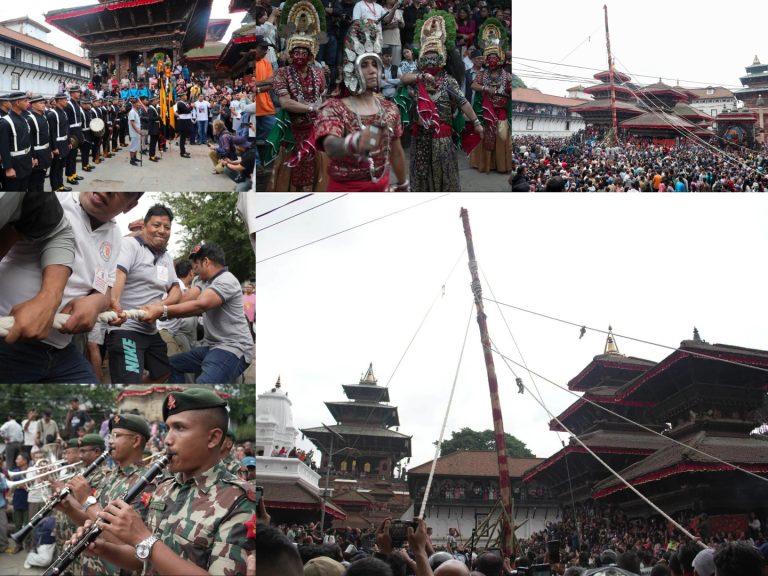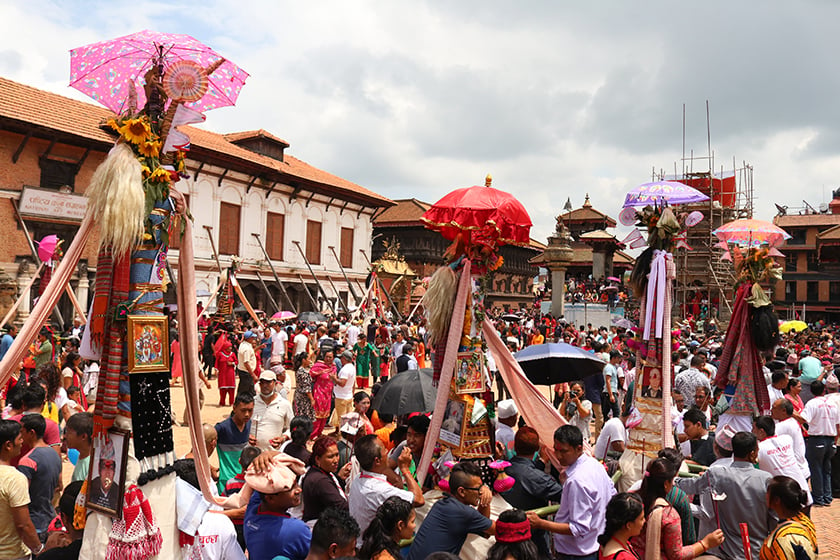
The Gai Jatra festival, which begins on the first day of the lunar month of Bhadra Krishna and continues for eight days until Ashtami, has been celebrated across major cities in Nepal with various cultural programs in memory of deceased loved ones.
The day following Gai Jatra, known as “Ropai Jatra,” is celebrated in Baudhanath, and the day after, “Khadga Jatra” is observed in Jayabageshwori. Different regions celebrate Gai Jatra under various local names and customs, a tradition that dates back to the Malla period.
In remembrance of relatives who have passed away over the past year, today people adorned as cows or in cow costumes are paraded around the town. Offerings of milk, fruits, bread, beaten rice, yogurt, grains, and money are made by devotees.
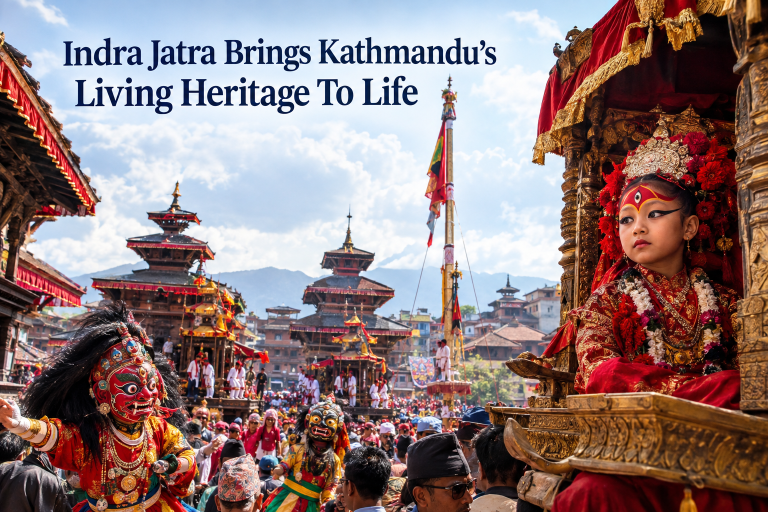
During the Gai Jatra celebrations, children dressed in cow costumes lead processions accompanied by cultural tableaux and decorations. These events attract significant public attention and participation, highlighting the festival’s vibrant atmosphere.
The Gai Jatra festival, observed from Bhadra Krishna Pratipada to Ashtami, involves traditional rituals such as city parades, which are believed to help the deceased’s soul cross the Vaitarani River. Historical records indicate that King Pratap Malla instituted this tradition to demonstrate shared mourning for his queen, who was deeply grief-stricken over the loss of their son. This custom was further developed to include various performances and satirical programs to lighten the mood.
The tradition of passing through Hanuman Dhoka Palace during the Gai Jatra procession continues to this day. Although the festival is celebrated in various cities across Nepal, it holds particular significance and grandeur in the Kathmandu Valley.
Throughout the festival, various performances, satirical displays of social issues, dances, and songs from the Ramayana are performed in memory of the deceased. Noteworthy exhibits include samples of paddy from the Satya Yuga displayed in Patan and books written in gold and silver letters shown in Thamel, Kathmandu.
Modern celebrations of Gai Jatra often include public events that highlight social issues and bring attention to societal anomalies through entertaining and satirical means. Newspapers also publish special humor and satire issues addressing social customs and issues.
The festival is celebrated not only in the Kathmandu Valley but also in cities such as Banepa, Dhulikhel, Panauti, Bahraich, Trishuli, Dolakha, Khotang, Bhojpur, Chainpur, Ilam, Dharan, Biratnagar, Birgunj, Hetauda, and Pokhara. Public holidays are observed in the Kathmandu Valley during the Gai Jatra festival.